This is a privately maintained blog; the expressed views and opinions on this website are the author's alone, and do not represent those of the United Nations system, the Falls Church Volunteer Fire Department, the Arlington County Fire Department, the governments of the City of Falls Church and Arlington County, or any other government, organization, entity, association (you get the picture) mentioned in this blog unless otherwise specified.
The Urban Search and Rescue Team from the neighboring Fairfax County’s Virginia Task Force 1 are preparing to Haiti in response to the catastrophic 7.0-scale earthquake that hit the are this morning.
Reports indicate that as many as 3 million people were affected, and this number ins expected to climb.
Check out the posting on statter911.com about VA-TF1.
Upon arriving at Dulles International Airport on Dec. 26 after 14 days back home in Seoul, things shifted to full gear with the fire department.
After responding to a Light and Air 103 call for a flooded basement at a single family dwelling, and a house fire on N. Longfellow St. (will be covering this in a separate posting) I responded with other Falls Church volunteers to the water main break at Reagan National Airport Terminal C.
Responding Company 6 units included Utility 106 and Light and Air 103.
Upon arrival to the scene, the Metropolitan Washington Airports Authority fire units and several Alexandria units set up a command post and began directing personnel for recon.
The Falls Church volunteers were assigned to a MWAA engineer to and headed to the lower floors of Terminal C that was reported to have the most severe leaks.
The lower floors were heavily flooded with nearly an inch in water.
Crews used squeegees to guide the water to the elevator shaft that one of our Falls Church officers discovered to have a sump pump at the bottom.
Others took down sagging ceiling panels damaged by water and deployed salvage covers in rooms with ceiling leakage.
I had to leave early for work, but the entire incident lasted over 5 hours.
– Buy some small tools (screw drivers, plyers, etc.)
– Get some DOOR CHOCKS!
– Control your enthusiasm
– Situational awareness, especially in situations where the ceiling is unstable
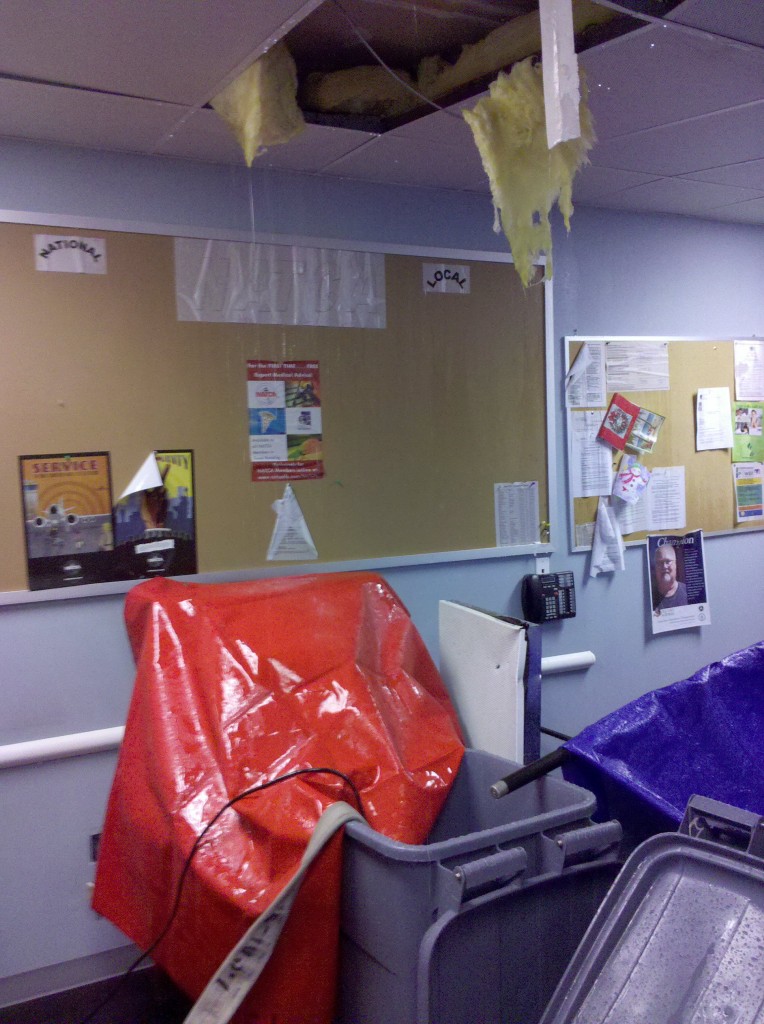
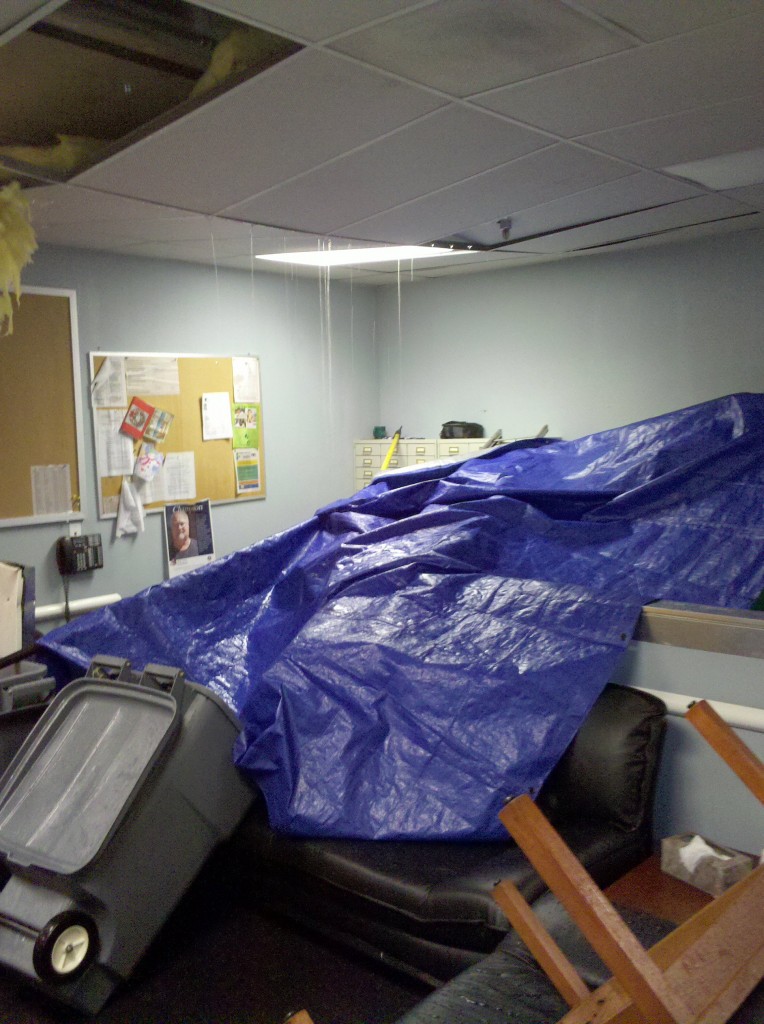
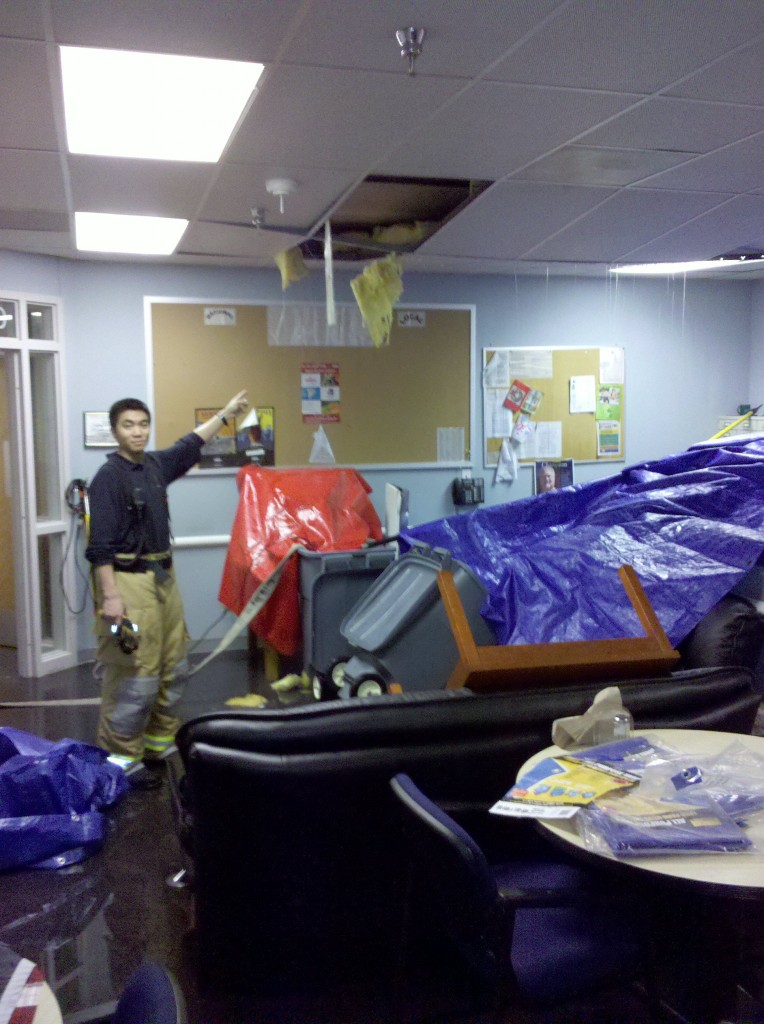
Here are some photos of the offices under Terminal C that were flooded.
Salvage covers deployed to guide water from the ceiling into trash bins
Pike poles and hooks used in combination with salvage covers to form a water chute to guide water into trash bins. Heavy leaking from the ceiling can be seen.
The point of origin. Water from the upper floors flowed into the offices in the lower floors of Terminal C. Shown is where the leaking was most severe. Heavy leaking can be seen.
When you run calls from the fire station close to a border with another jurisdiction, it is important to maintain heathy relations with your counterparts from the other side. Maintainin a basic understanding of how they operate insures that mission effectiveness remains at its best. Station 6 units regularly interact with those from Fairfax stations located along the Arlington/Fairfax border during mutual aid and multi-jurisdictional operations, including Station 28 (Seven Corners), Station 10 (Bailey’s Crossroads), Station 1 (Mclean), Station 13 (Dunn Loring), and Station 18 (Jefferson).
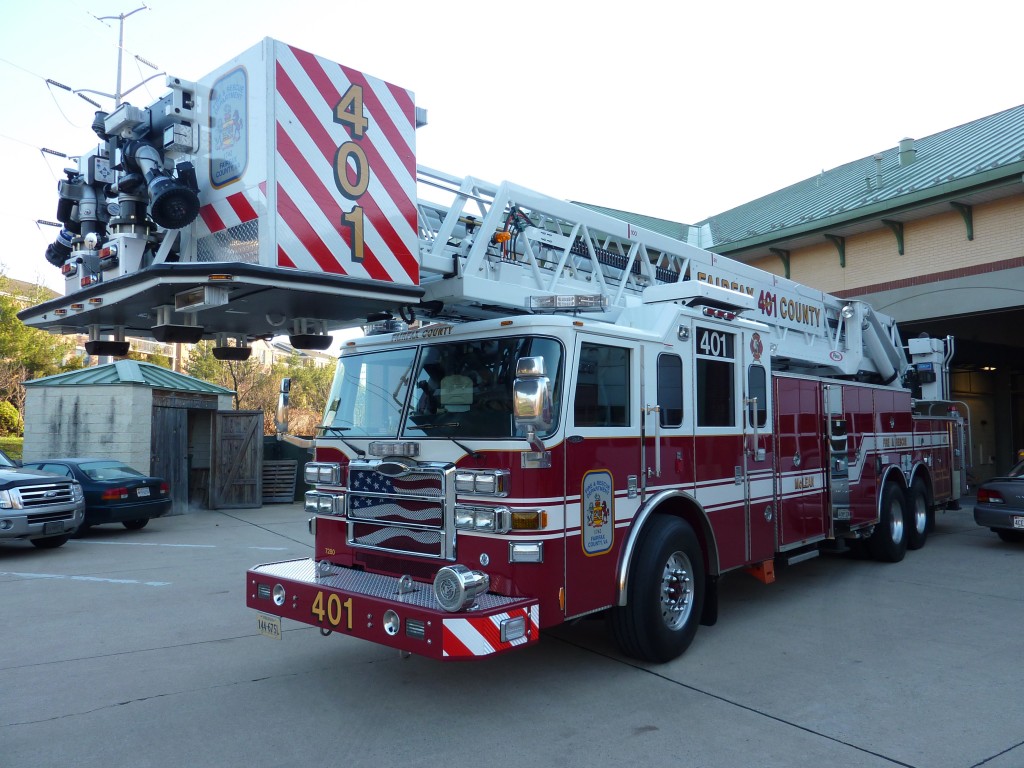
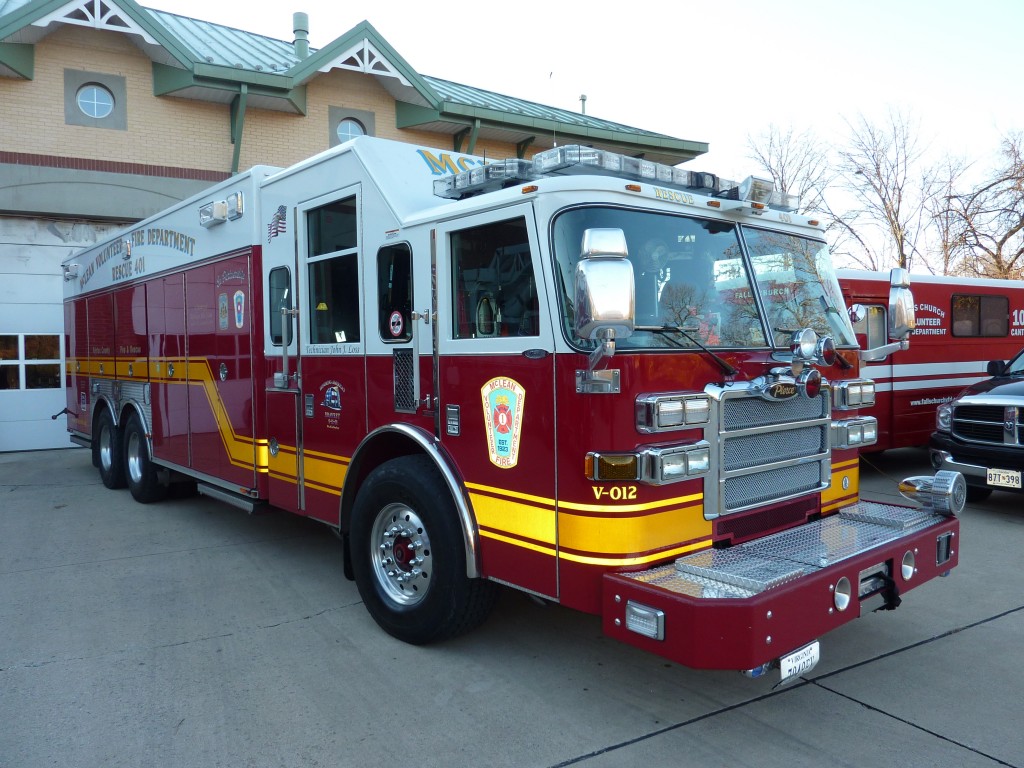
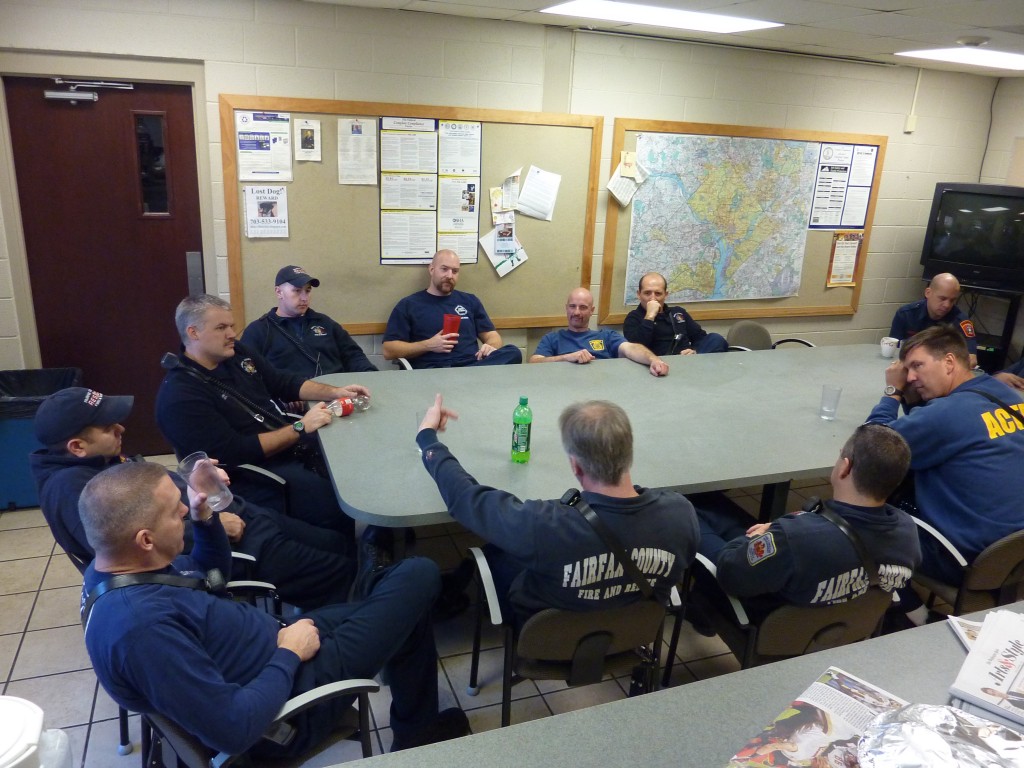
On Nov. 29, the ACFD career crew at Station 6 (Falls Church) invited crews of Tower 401 and Rescue 401 from Fairfax Station 1 (Mclean; www.mcleanvfd.org) over for our weekend breakfast.
Here are some images from yesterday.
Mclean VFD Tower 401
Mclean VFD Rescue 401
ACFD and FCFRD crews chat after breakfast at Station 6 (Falls Church)
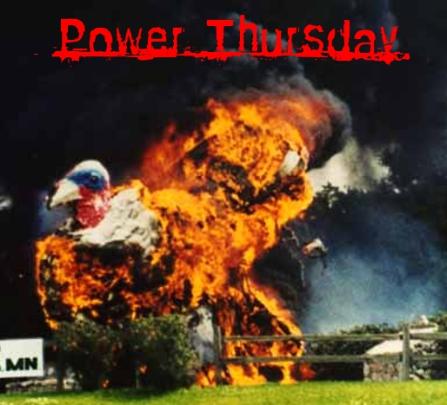
It is a bit late, and most of the American population has probably already slipped into a food coma by now, so this message might come to you all a bit late. But that’s OK, because I just got to work for another 12-hour night shift on the night of Thanksgiving, so at least I have an excuse.
Happy Thanksgiving, and always stay safe around all those deep fryers!
The mission of the Falls Church Volunteer Fire Department, as with any other fire department around the world, is to aid in the preservation of life and property. This is achieved through a variety of activities, such as staffing frontline fire apparatus, training, and providing support for public events. FCVFD actively engages the public through various public outreach and education programs, such as birthday parties at the fire station and school visits.
Recently, our department began aggressively promoting and revamping preventive activities through public education, a task spearheaded by my dear friend and colleague Laura Katzif. Her efforts generated positive reactions throughout the community and established a new standard for fire prevention education and public outreach.
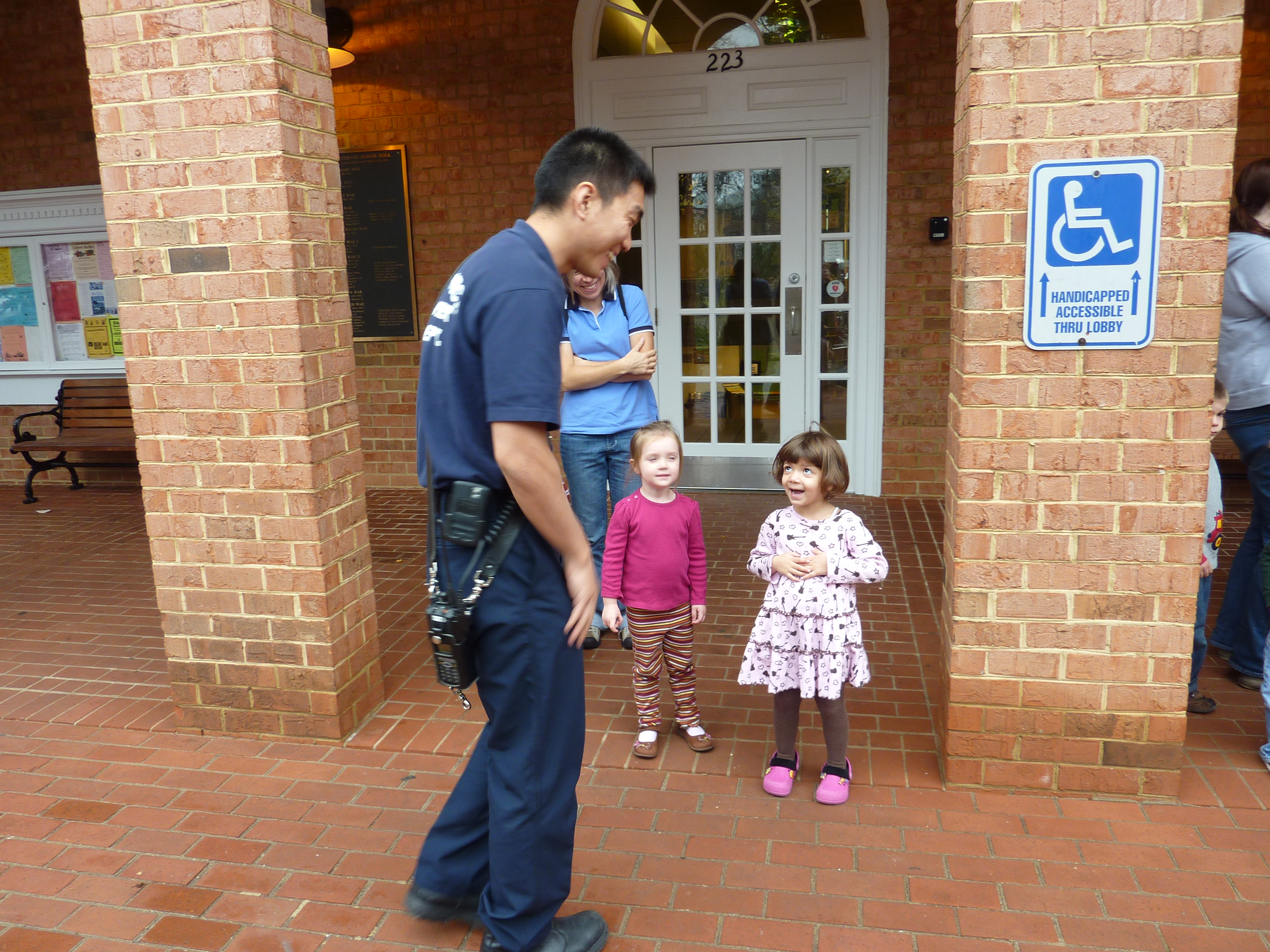
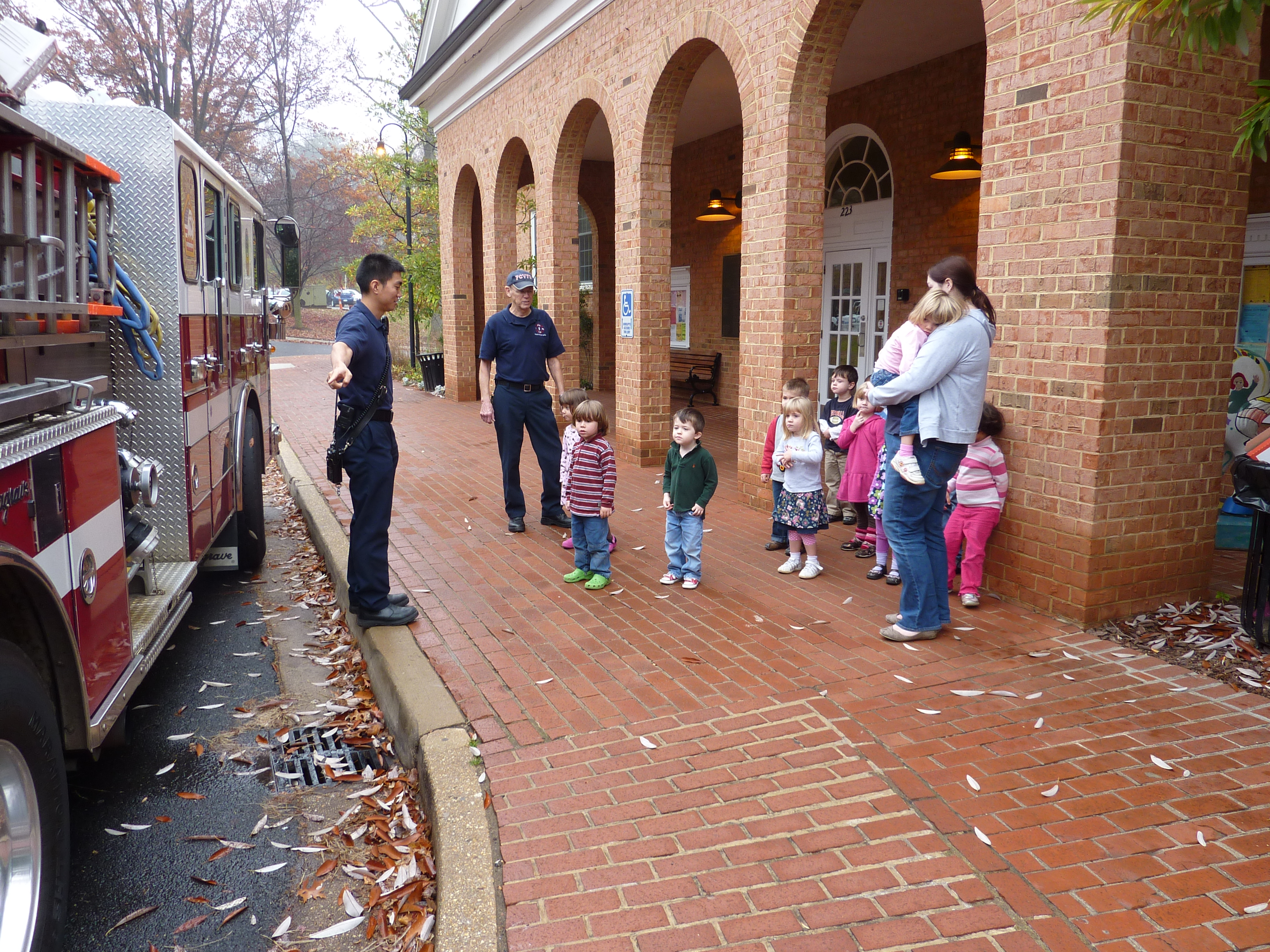
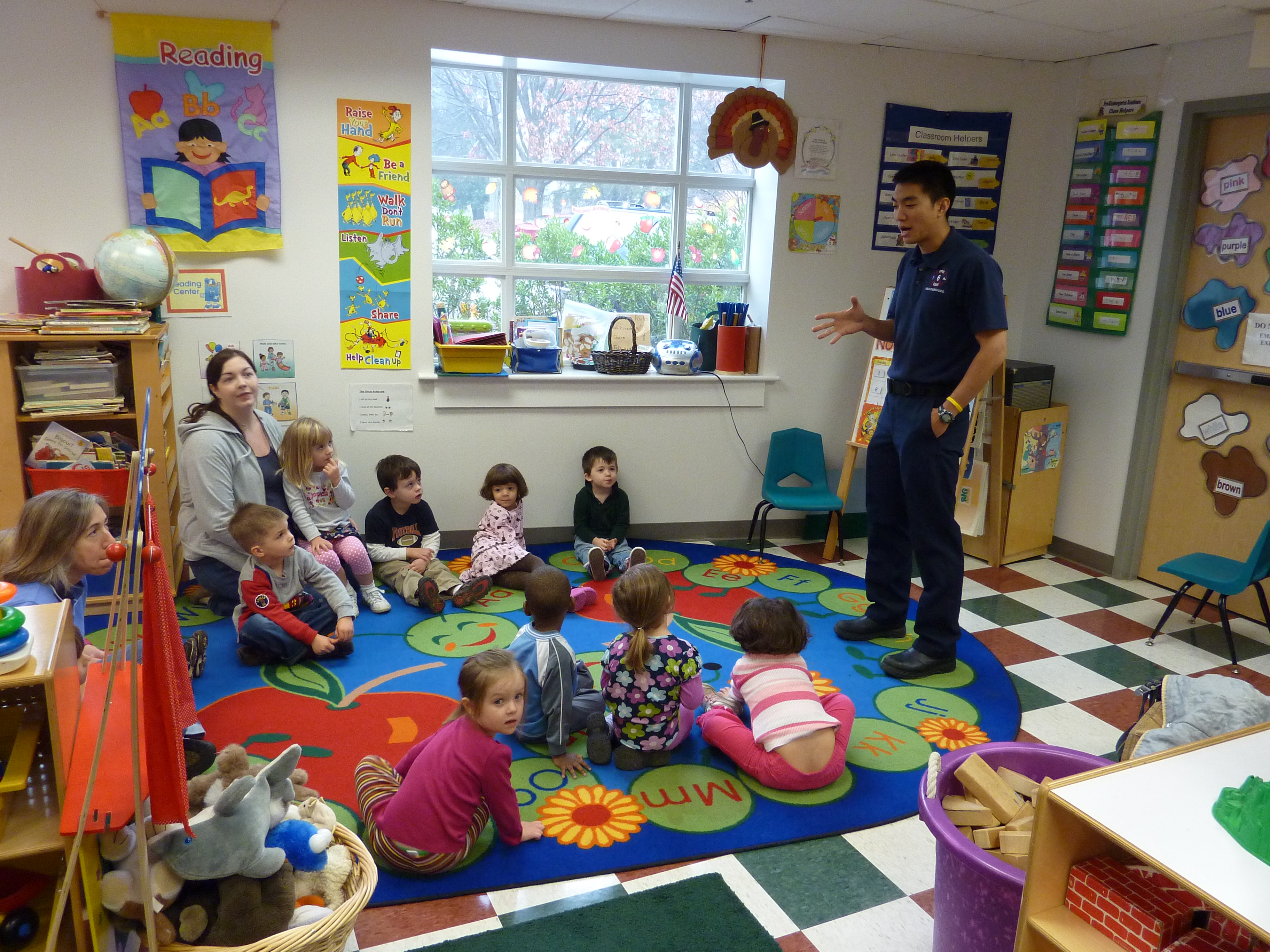
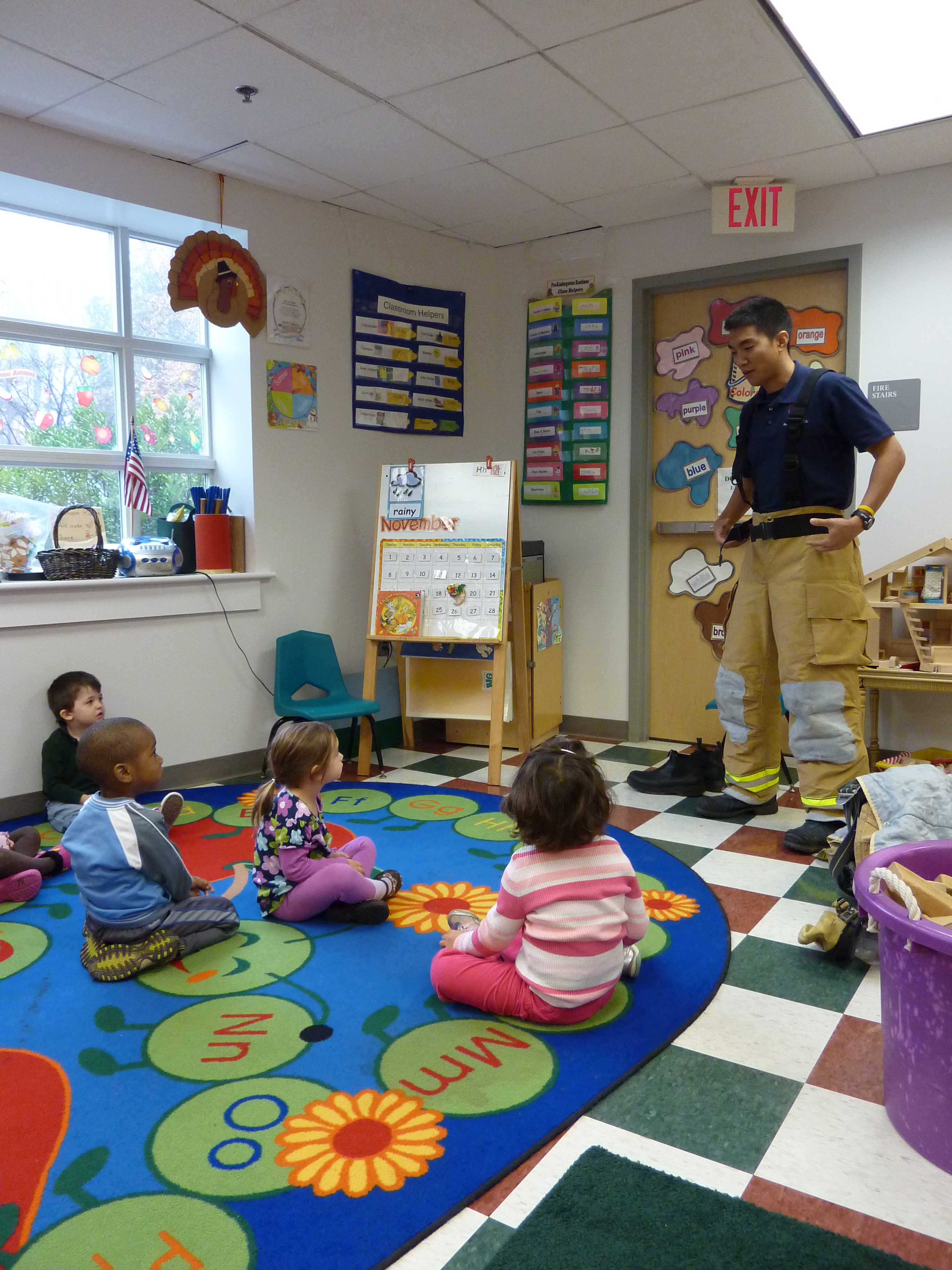
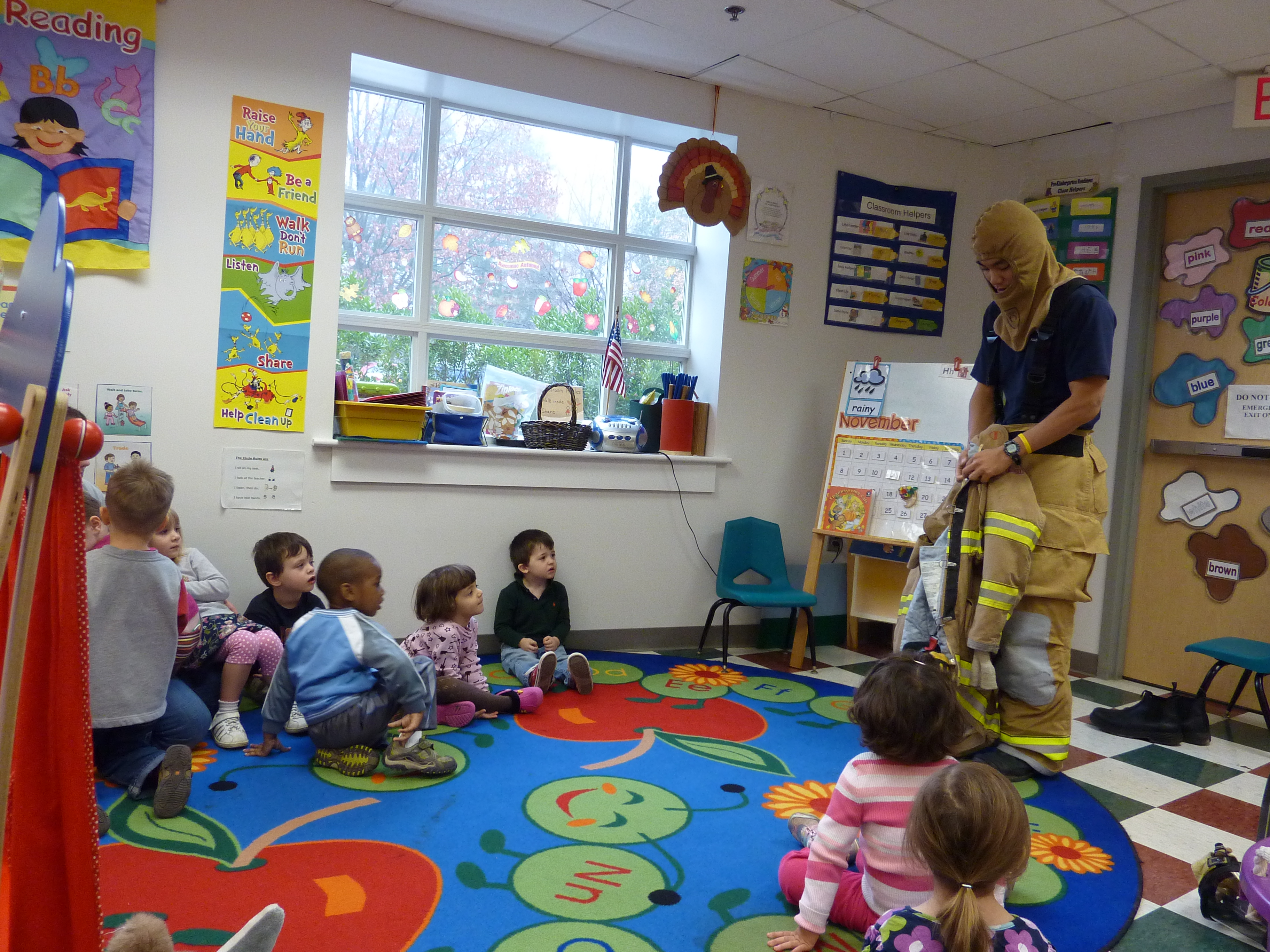
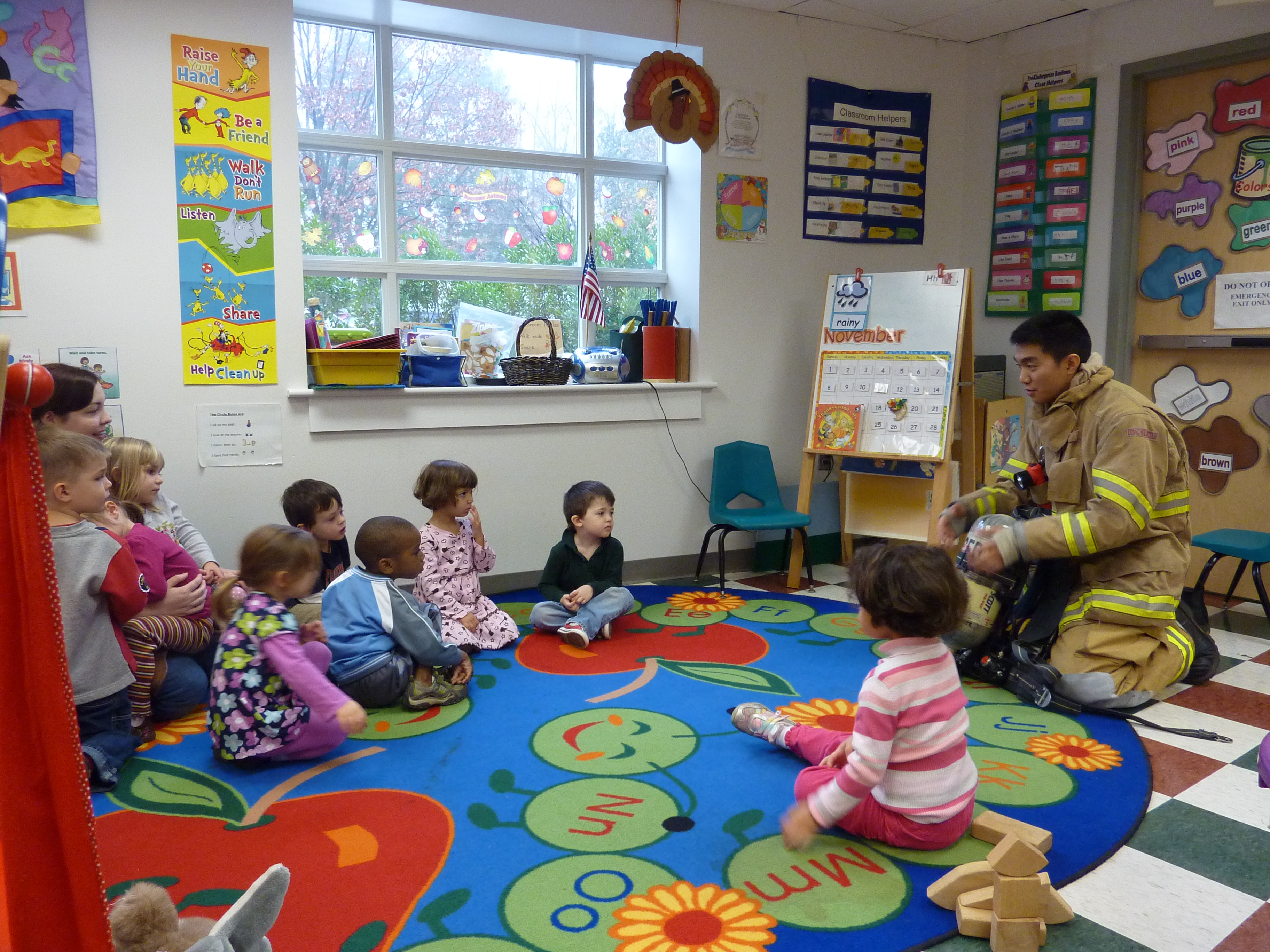
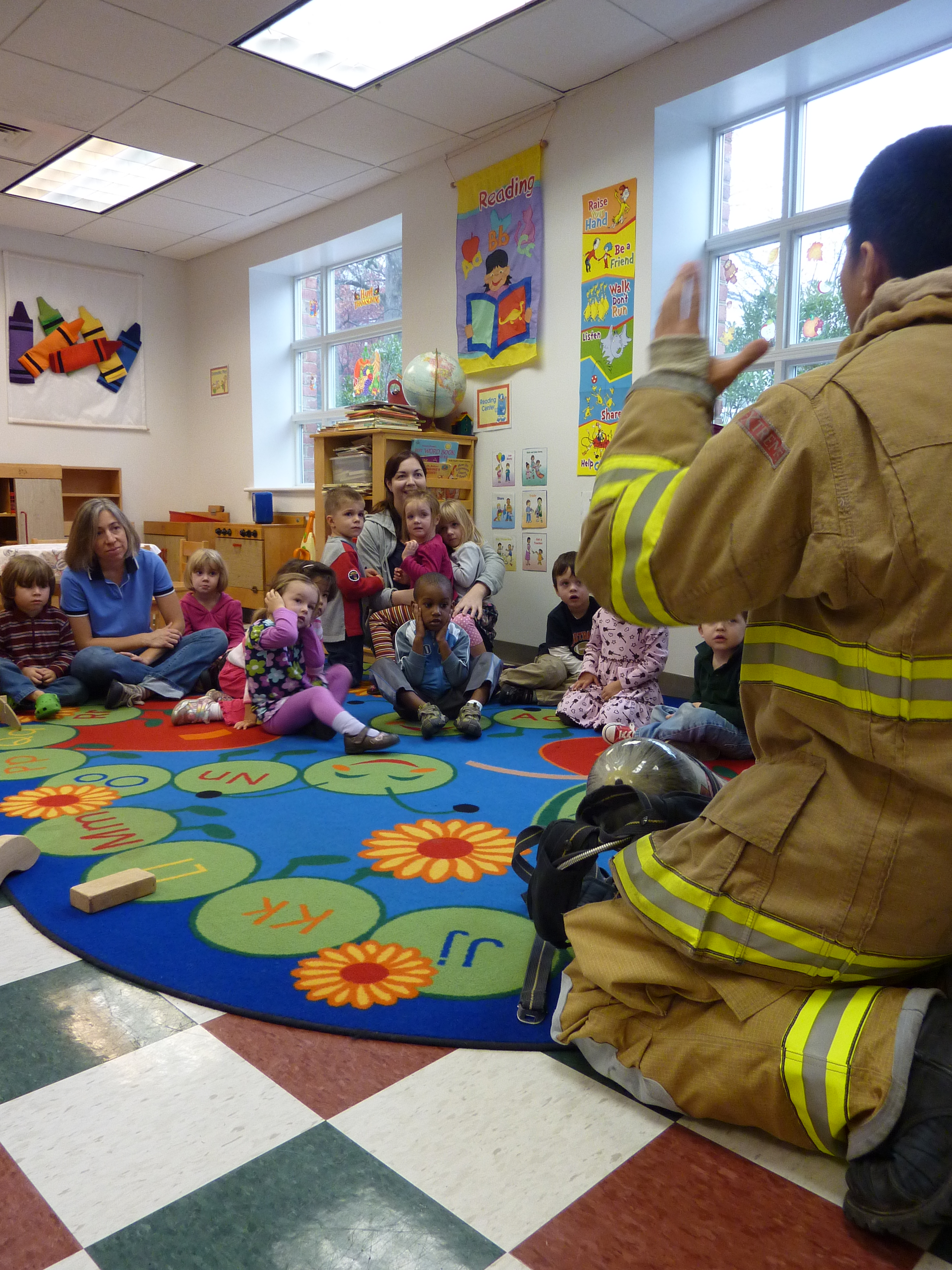
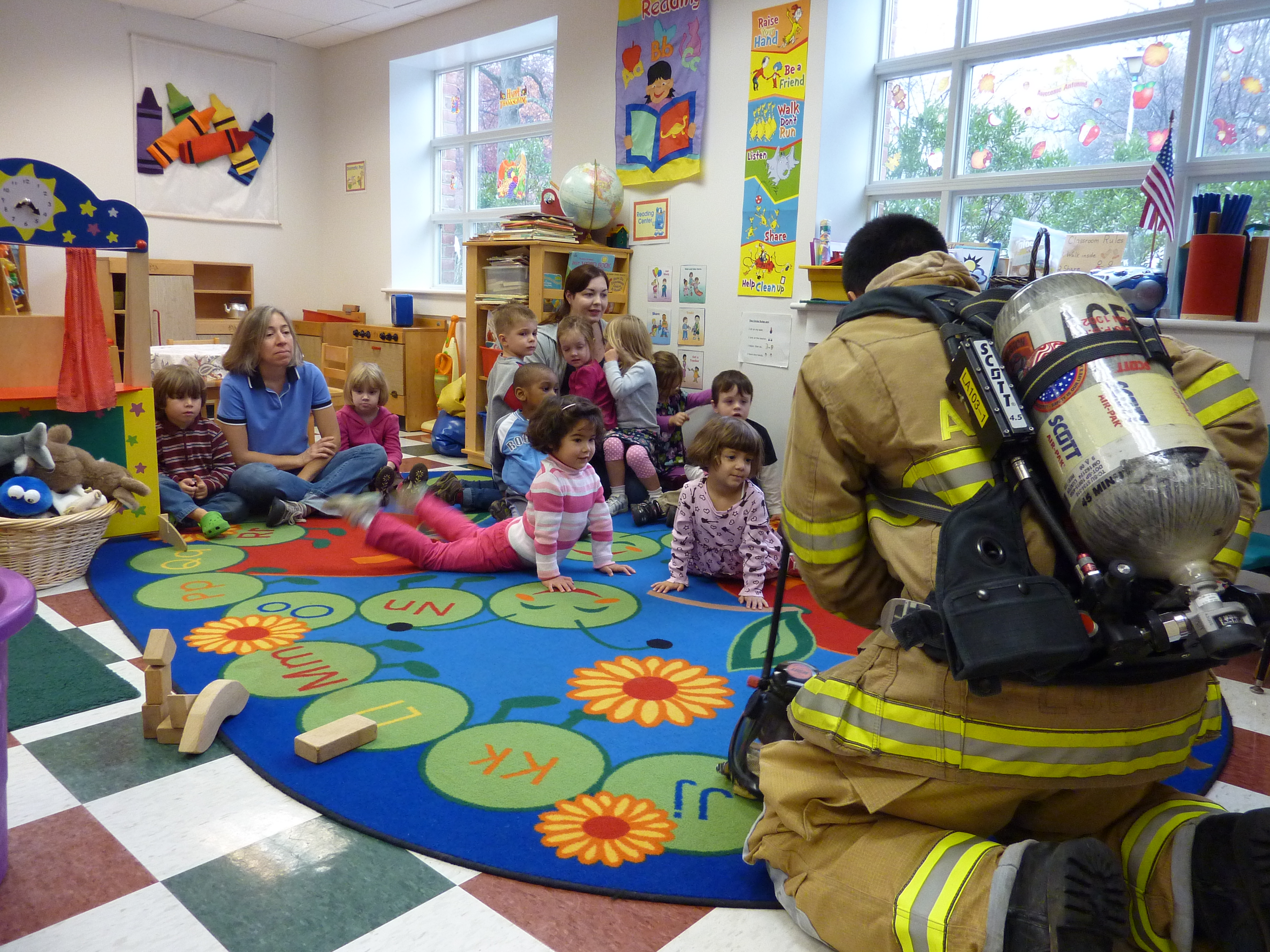
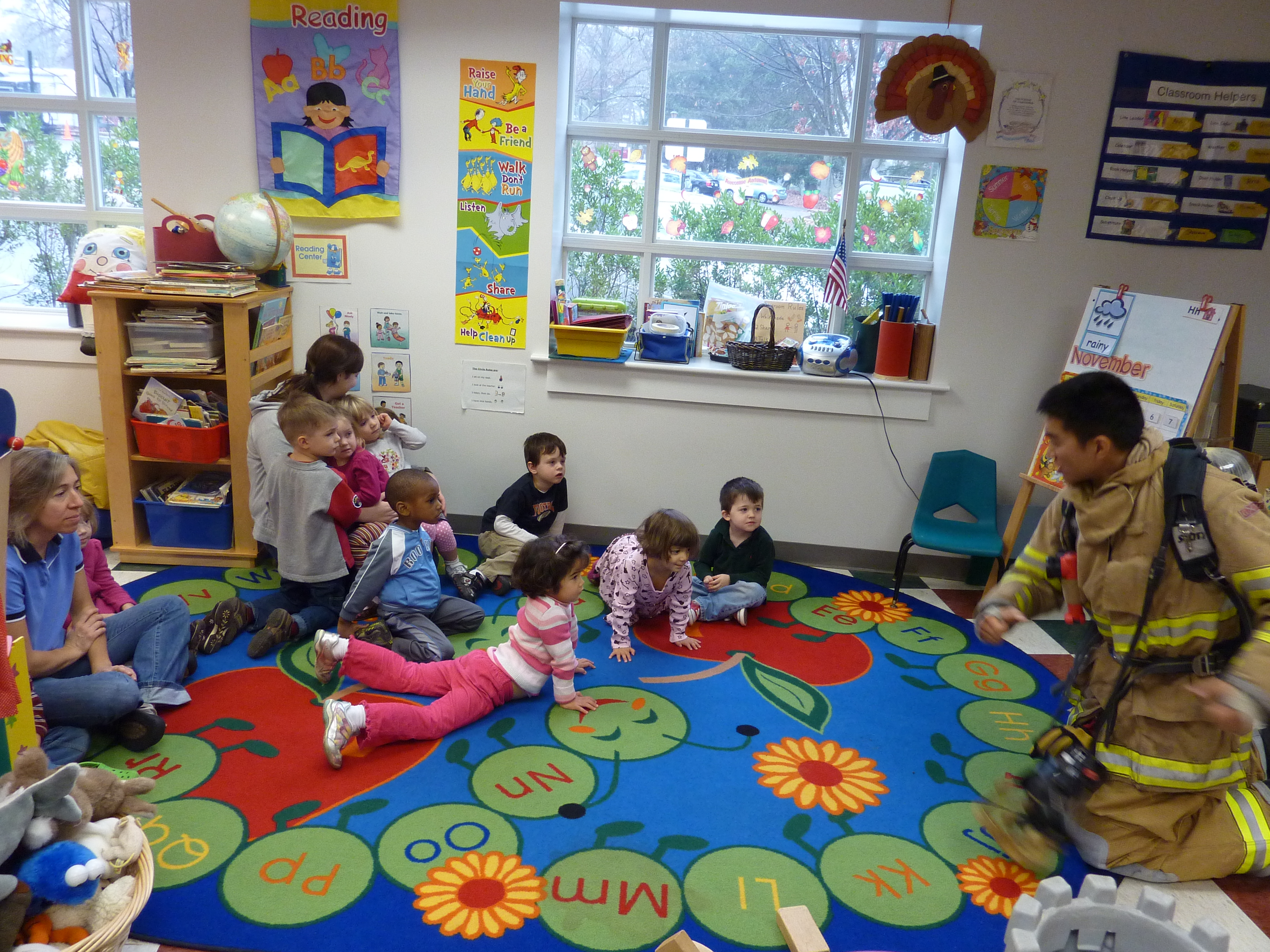
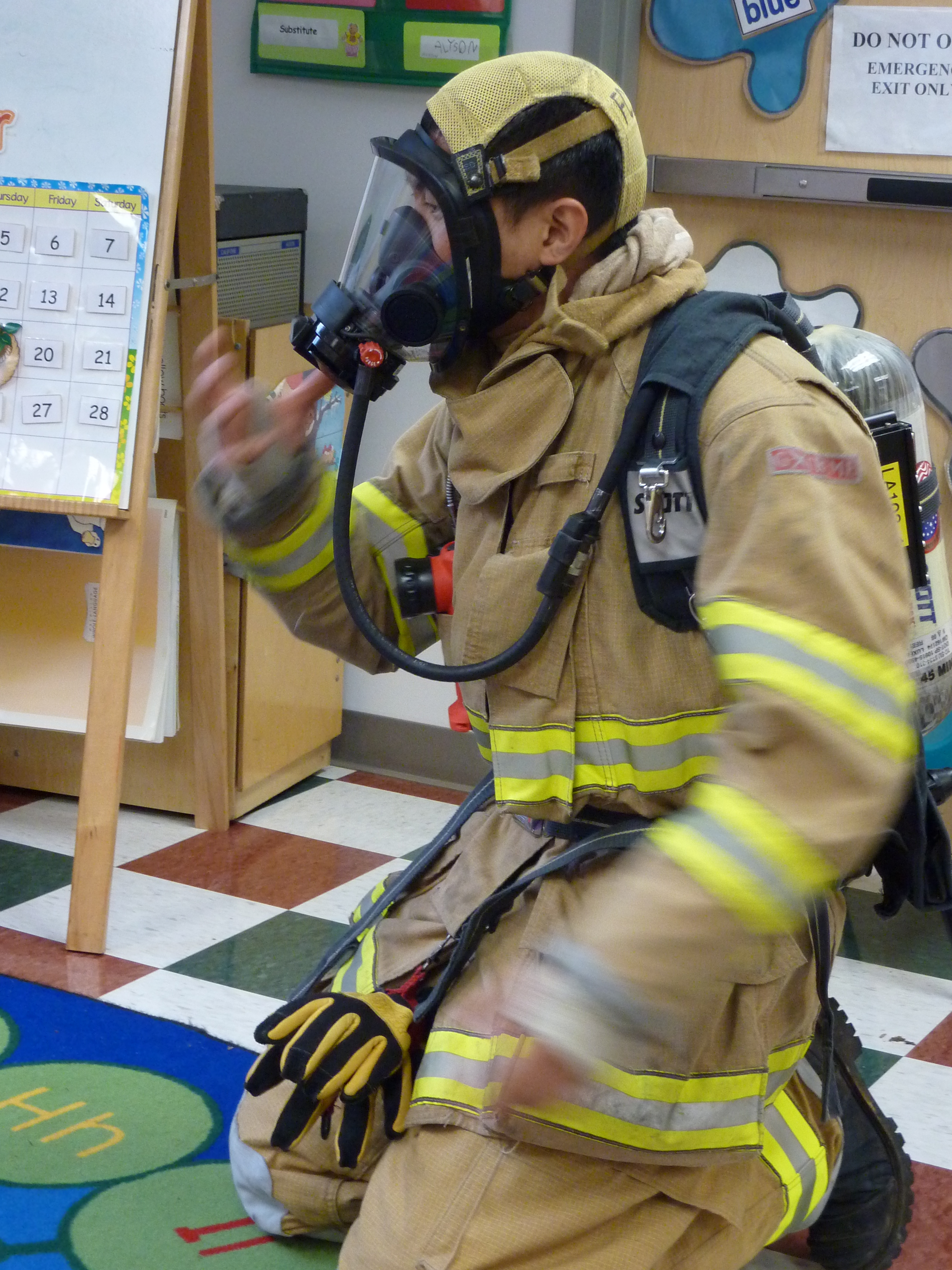
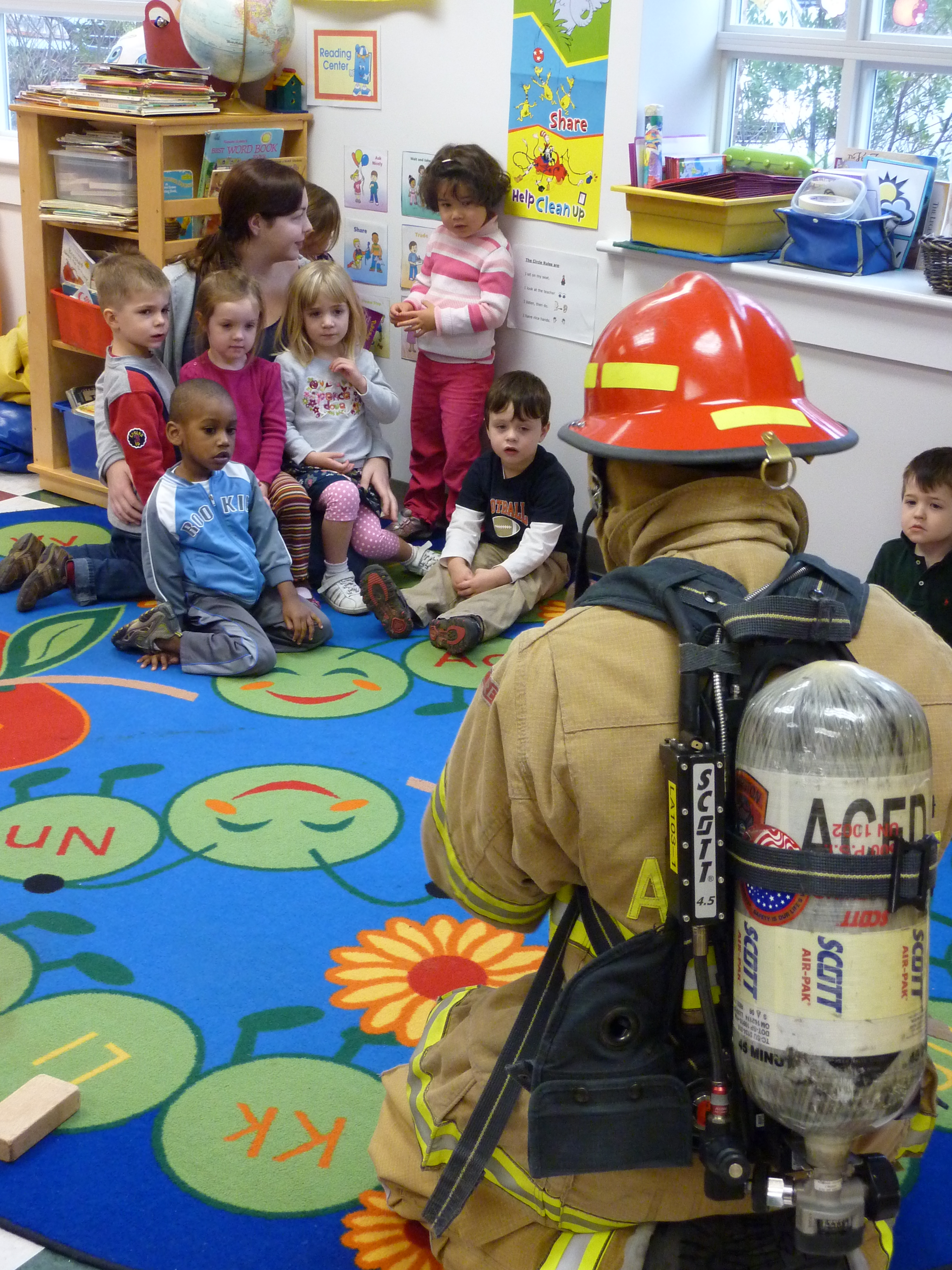
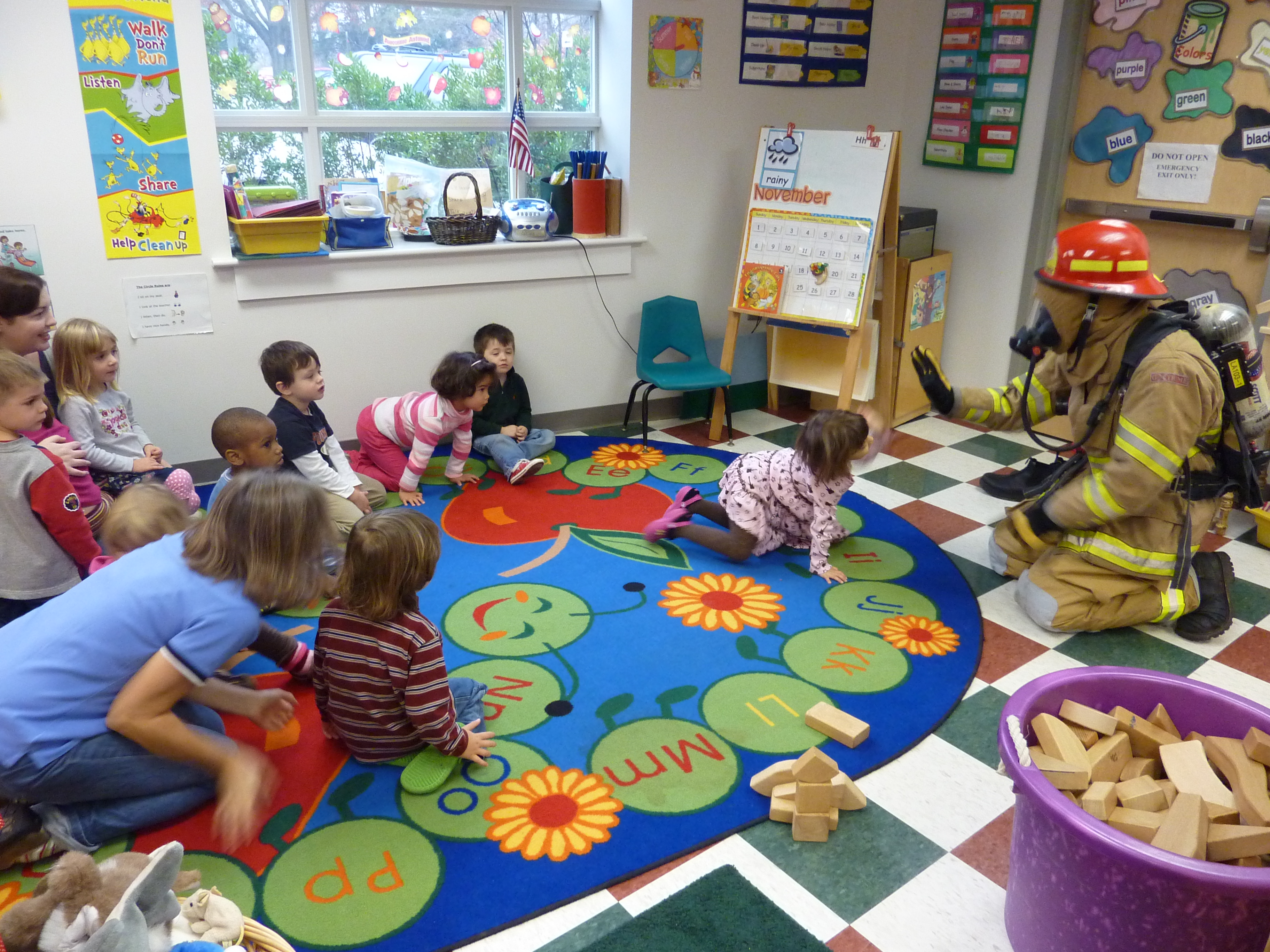
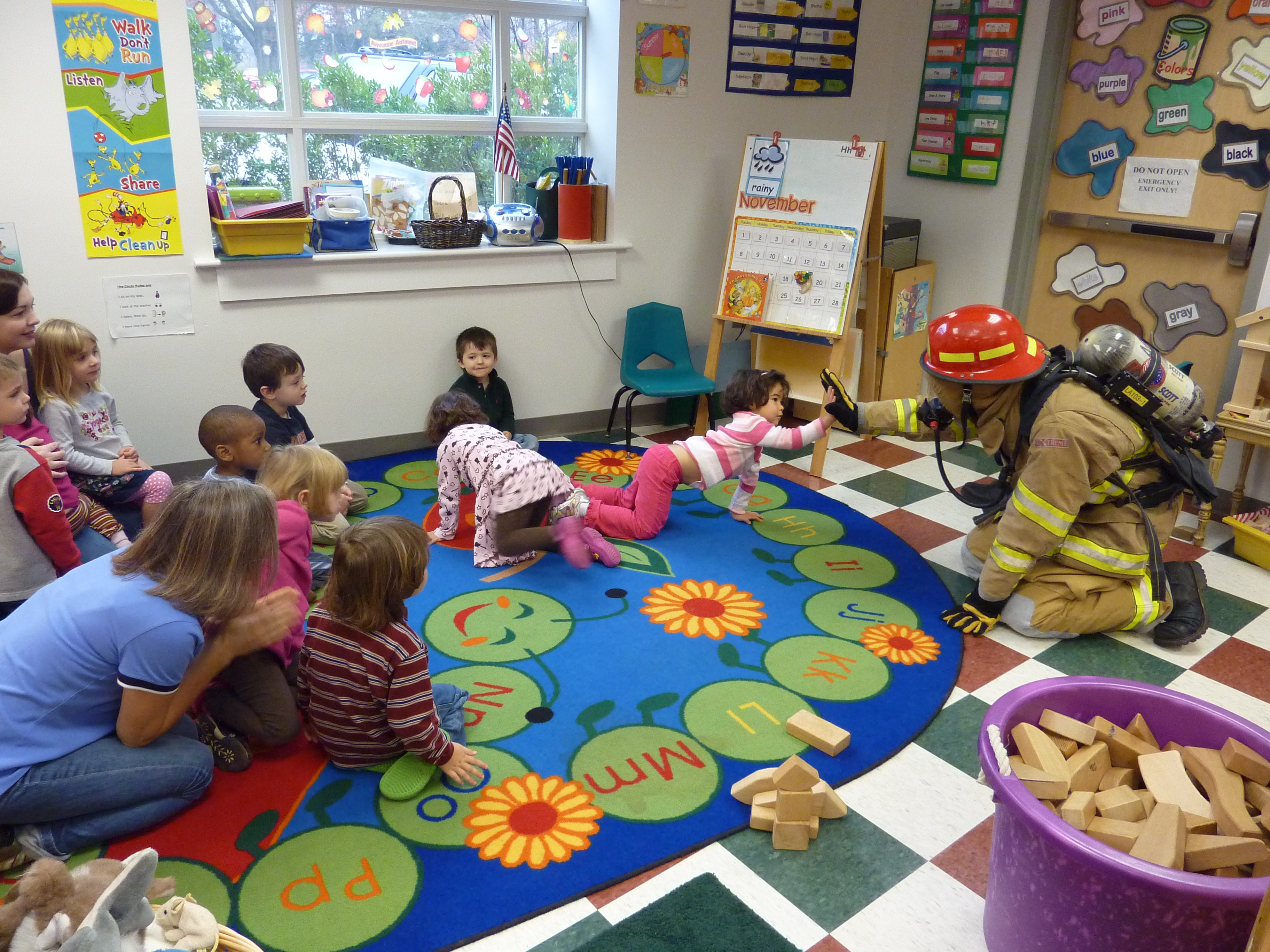
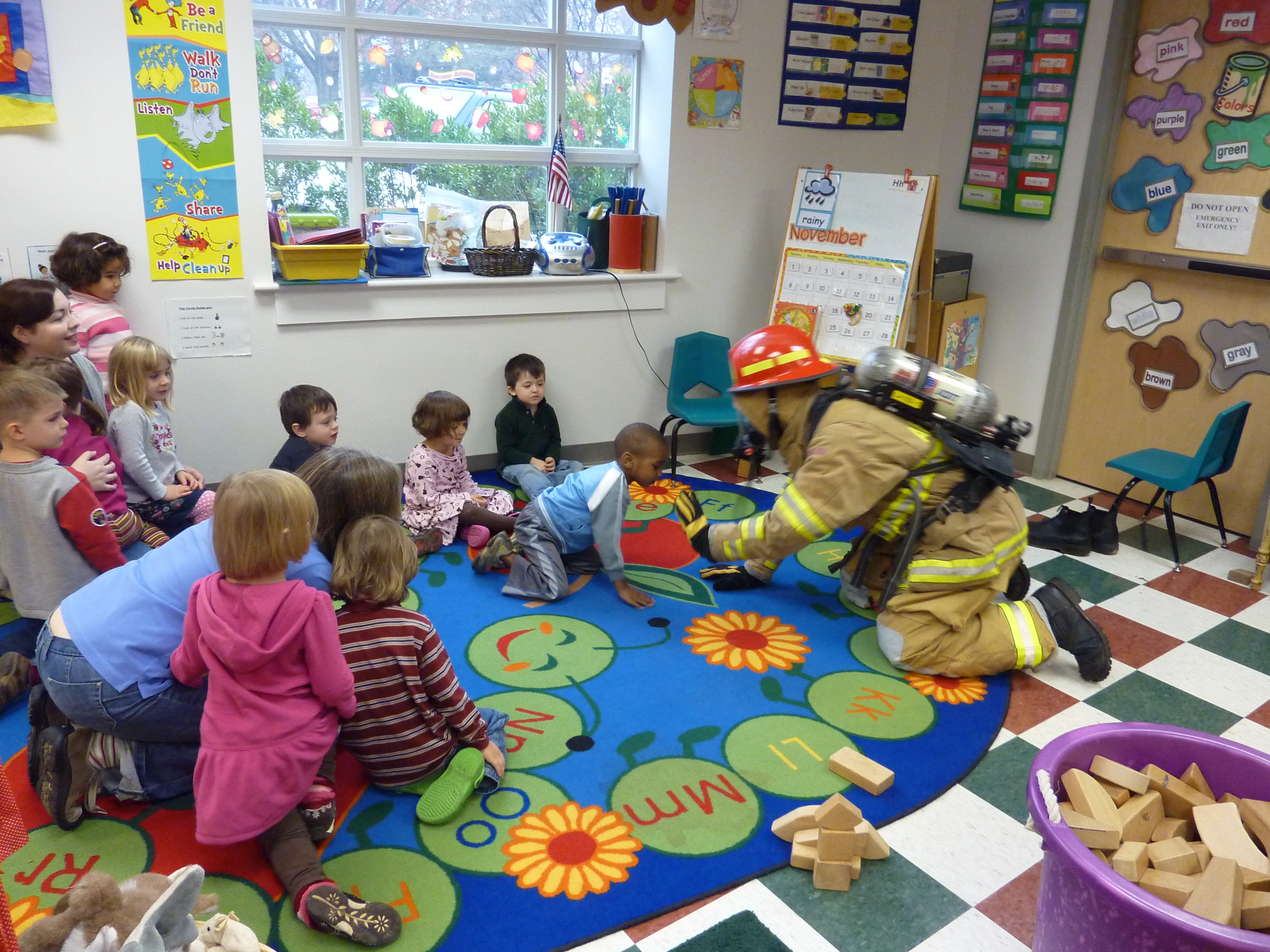
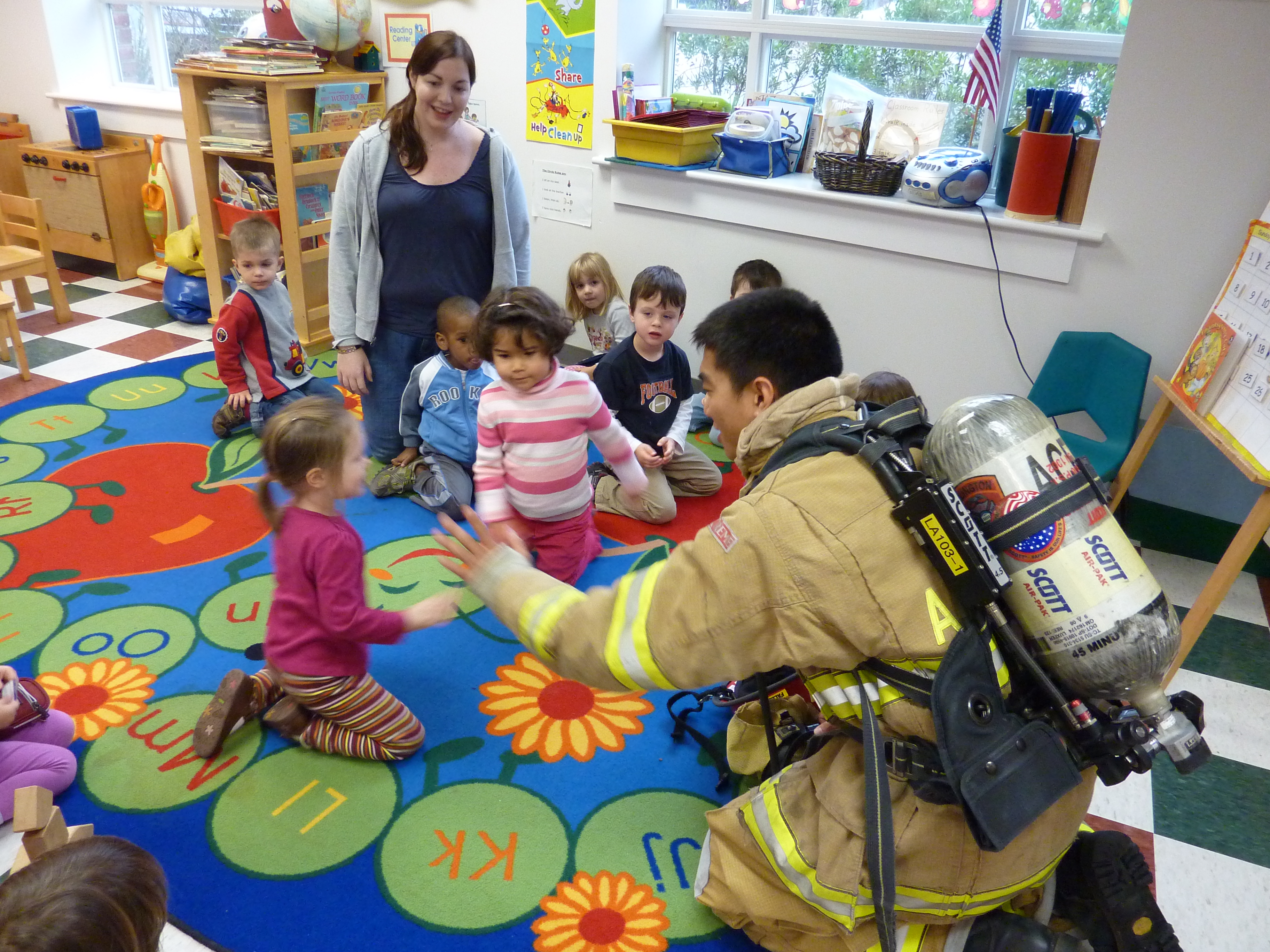
Last week, on Nov. 19, Laura, former FCVFD Chief Jim Clarke, and I visited the Falls Church Community Center Preschool for a fire prevention education session. Here are some photos of the visit.
This is something that is pretty much drilled into your head when you learn how to throw ladders in the fire service. Our instructors take this very seriously, and they penalize you pretty hard when you forget to do this during training. Checking for overhead obstacles that you may encounter on a fire scene, such as power lines, wires, TV cables, and even trees, is imperative in ensuring safety of the firefighter using ladders. Most trainees, myself included when I went through orientation training, don’t really appreciate the severe consequences of not building this habit.
Today was marked with a tragic accident that sends firefighters a sober reminder that you should ALWAYS check for overhead obstructions when throwing ladders on the fire ground. An Arlington County veteran employee of 24 years was electricuted and killed while taking down lights at a water main break scene. He and his partner was taking down a ladder when they lost control of it and accidentaly touched an overhead powerline.
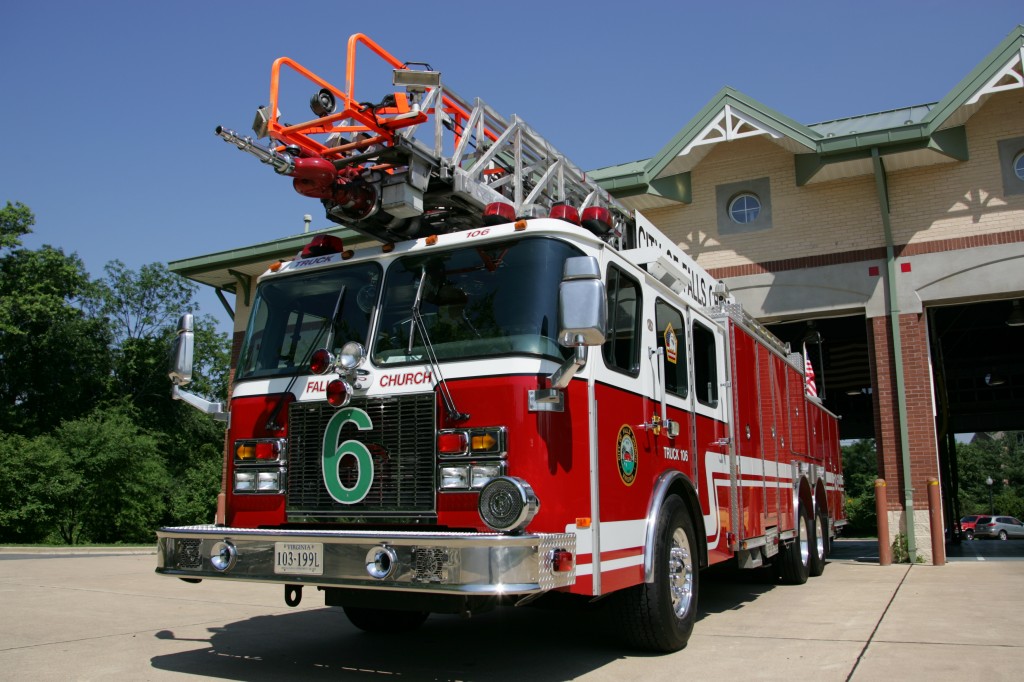
When I received my operational gear in April 2009, upon graduation from Arlington County’s volunteer indoctrination training program in December 2008, I started out riding Engine 106. Its versatility of running both EMS and fire calls was very appealing, and Truck 106 simply felt way too much for me. The sheer size of the apparatus itself, on top of the several dozens of tools it carried, was very intimidating.
“THE†Truck 106
Until I ran that one structure fire call in Fairfax County on Truck 106 (of which I will get into more detail in a later posting) that had me turn into a ‘truckie,’ running fire calls with the A Platoon under Captain William Bennett, one of ACFD’s finest line officers.
So it was another usual day riding with the ACFD career crew of Truck 106 on 20 November 2009. Only this time, it was a day of a lot of trouble shooting. The original Truck 106 was at the property yard for repairs, and had to ride on Reserve Truck 111 (redesignated as Truck 106 until the original returned). The Arlington County Fire Department runs a total of four aerial ladder trucks: Truck 106 at Station 6 (Falls Church), Truck 105 at Station 5 (Jefferson District), Tower 104 at Station 4 (Clarendon), and Reserve Truck 111 which is usually kept at the Arlington County Property Yard.
T105, TW104 and RT111 have identical chassis, which includes a heavy-duty ladder and a pump on board (Tower 104 has a bucket on its aerial, hence its designation). T106, a 2001 an Emergency-One Cyclone II medium duty aerial ladder truck, does not have a pump. Because of the space taken up by the pumper block of the chassis on RT111, tools have to be rearranged every time T106 goes out of service for routine repairs or emergency maintenance. As such, the crew spent most of the day rearranging the layout for tools.
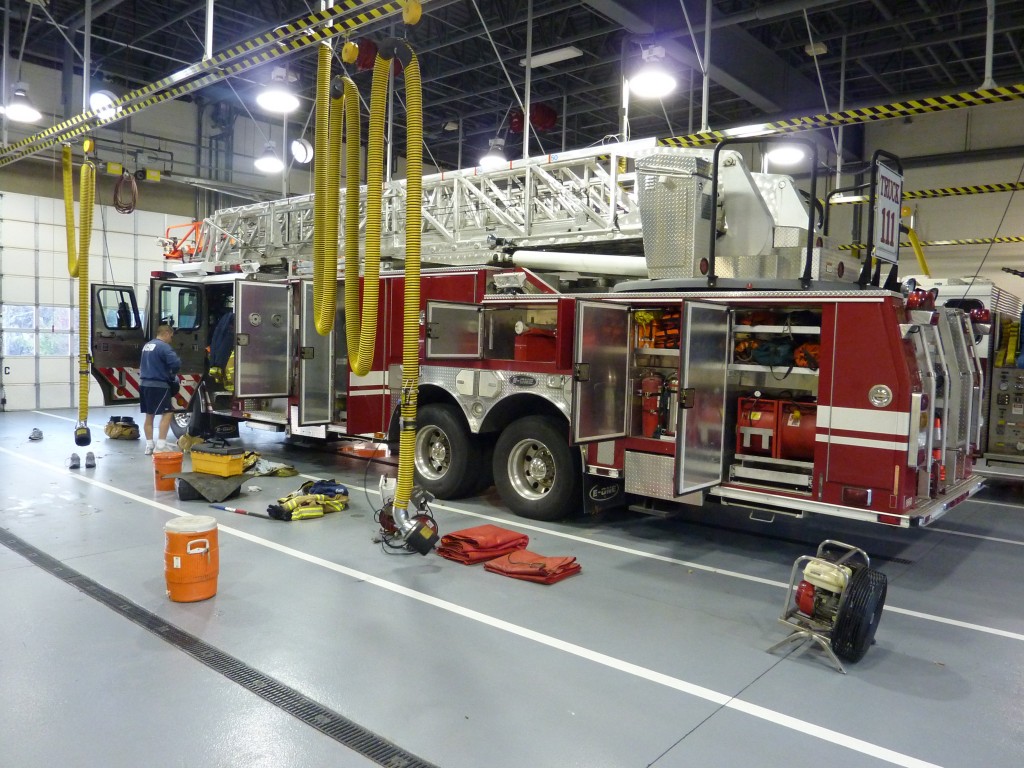
Reserve Truck 111, redesignated as Truck 106 while the original undergoes repairs
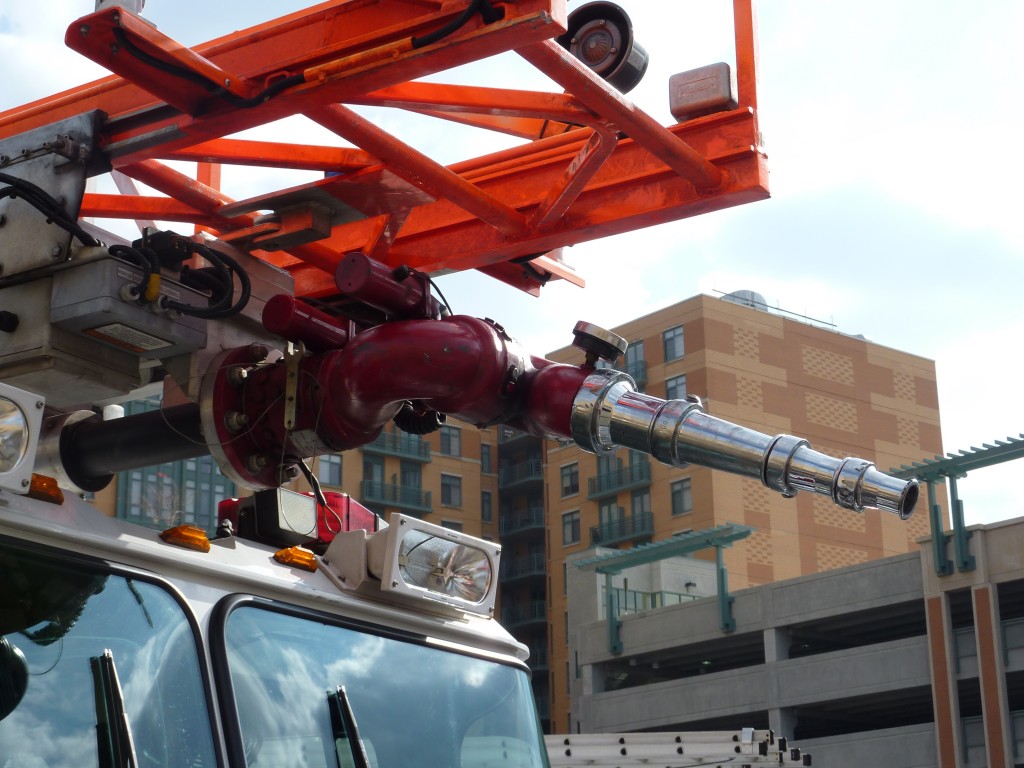
Rearranging tools wasn’t the only task the truck crew had to face. Firefighter Joe Marr, A Platoon’s designated chauffeur and long-time veteran on Truck 106(and one of the very few who can actually get things fixed on T106) noticed the aerial-mounted monitor would not elevate to achieve a straight level. Apparently another crew ran the monitor into another object and left it crooked (fresh scratch marks were found on the mount). So the truck crew ran down to the property yard to remedy the problem.
The damaged aerial ladder-mounted monitor on RT111
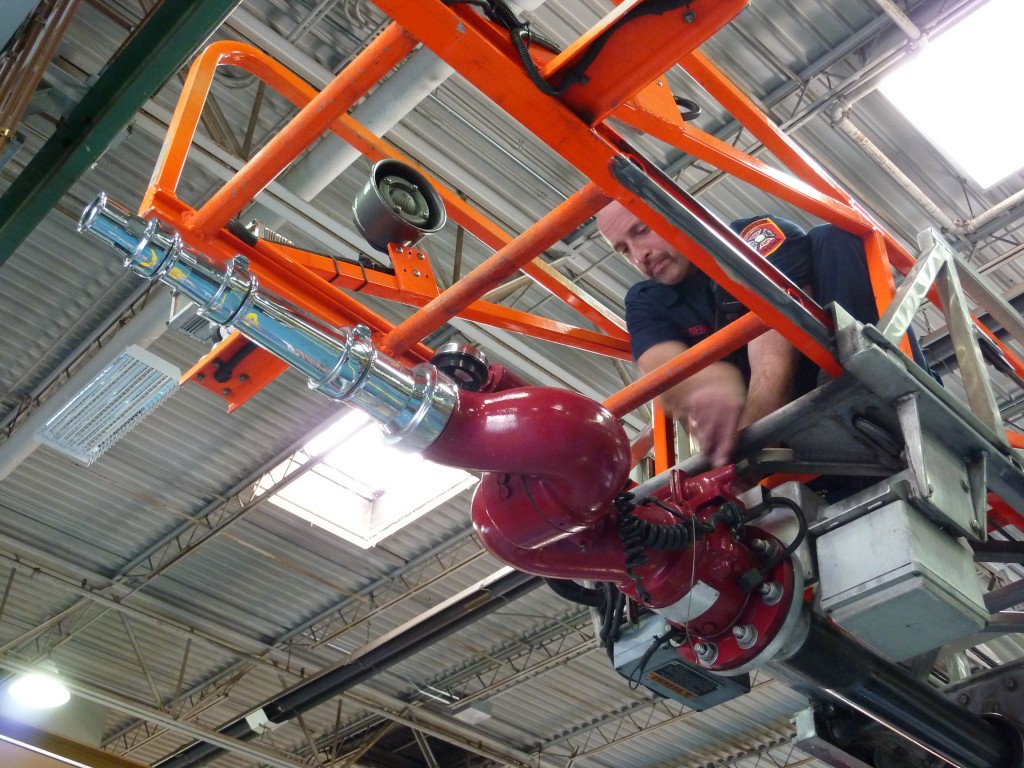
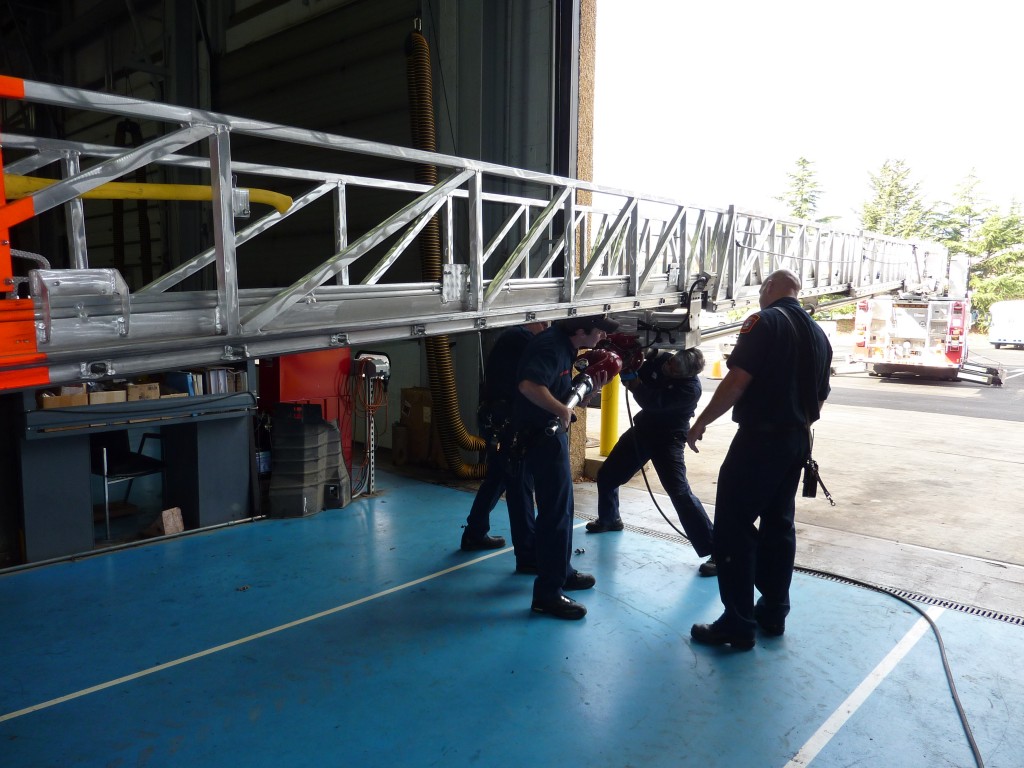
The mechanics at the property yard tells the crew that they would have to put the monitor out of service, which would leave RT111 without a monitor to execute master stream operations. FF Marr suggests that they swap the monitor on the original T106 (which was at the property yard at the time; it wasn’t going anywhere anyways). And so the operation to swap monitors begins.
CPT Bennett works on releasing the bolts securing the aerial ladder-mounted monitor on T106
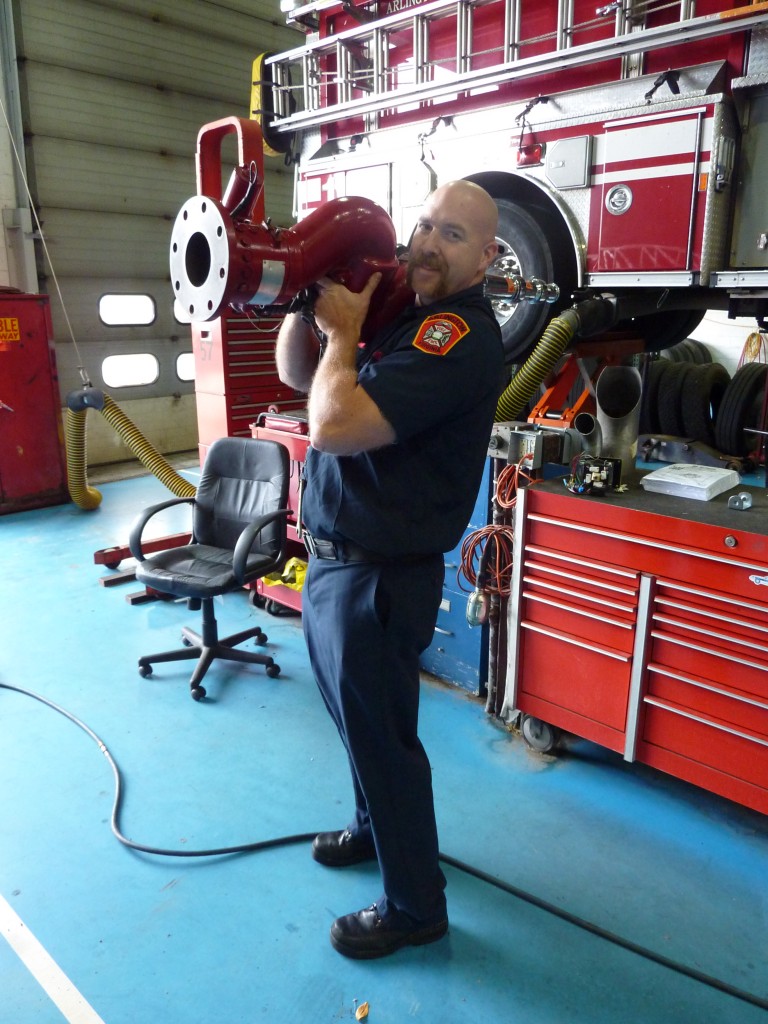
Firefighter Runion shows off his big guns while carrying the monitor from the original T106
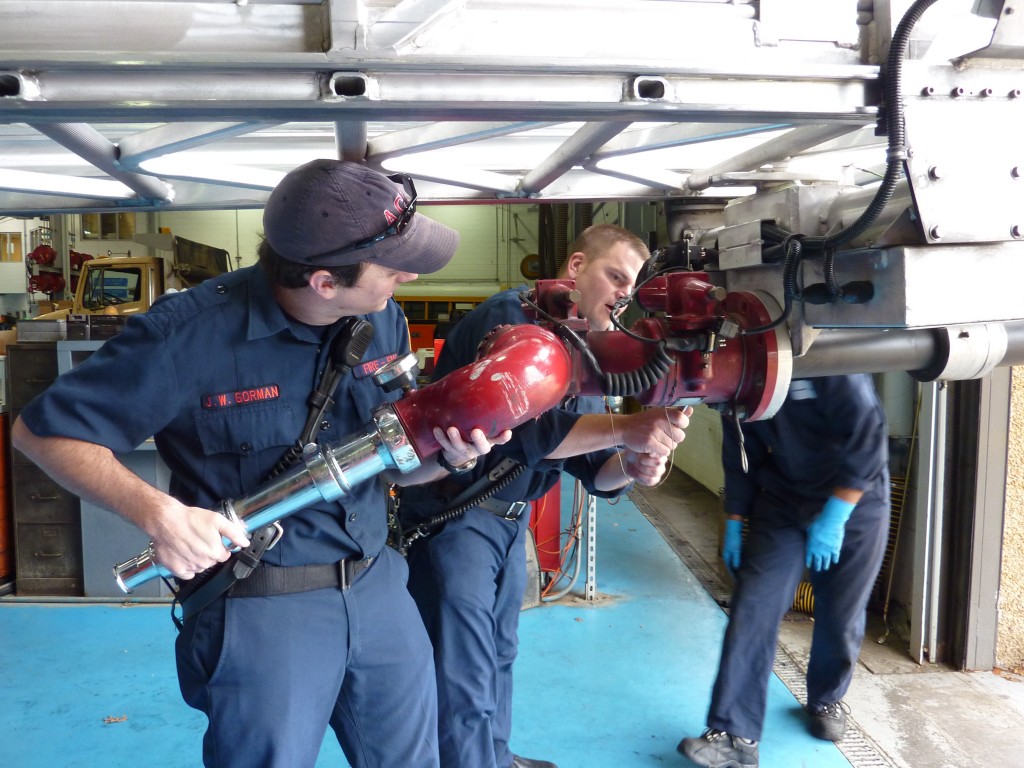
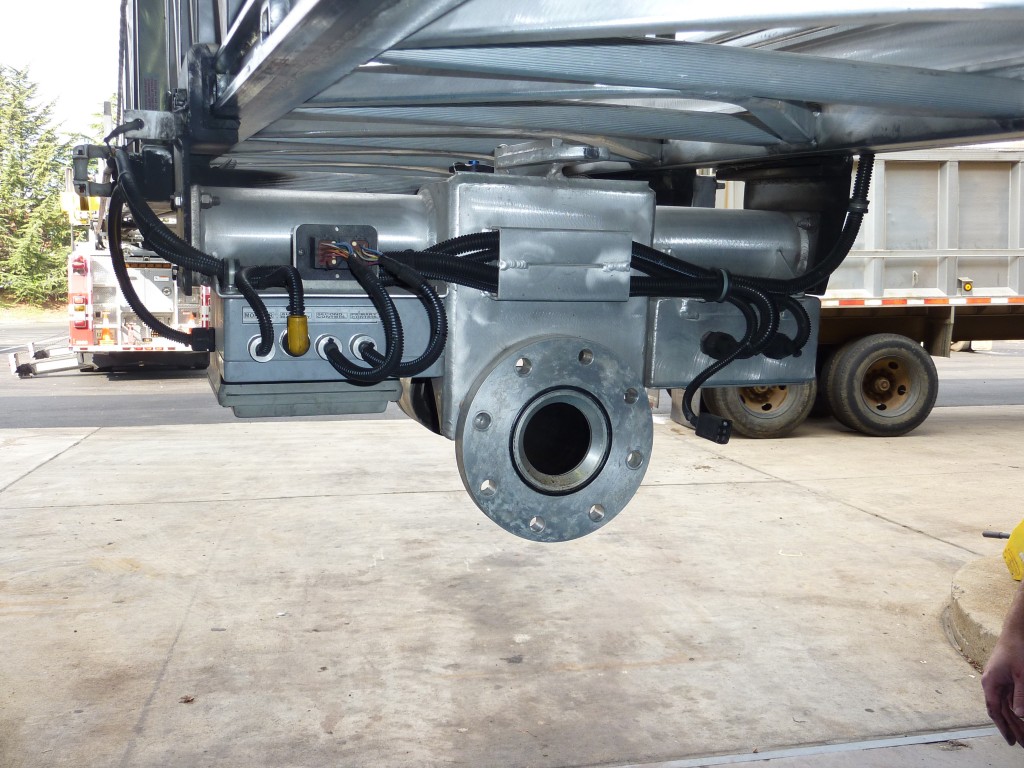
Firefighters Gorman (right) and Marr work on removing the damaged monitor mounted on RT111’s aerial ladder. Note the scuffmarks on the waterway.
The aerial ladder on RT111 extended into one of the maintenance bays at the Arlington County Property Yard during nozzle replacement
The tip of the aerial ladder on RT111, minus the nozzle turret
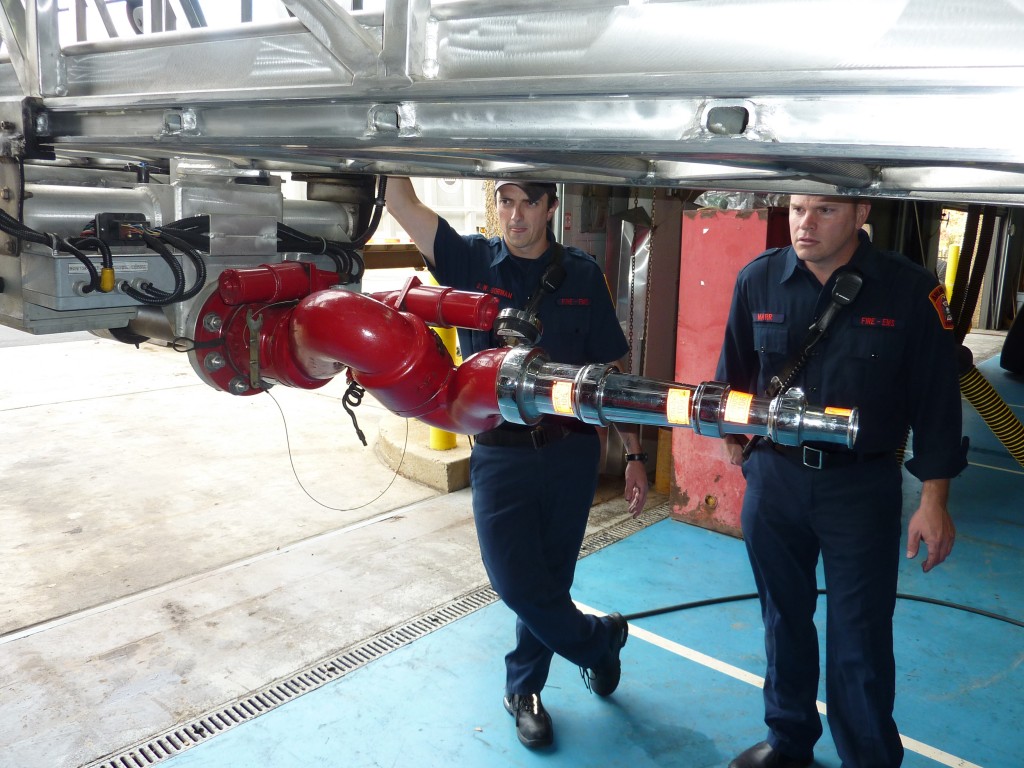
Aerial-mounted nozzle being installed on to RT111
Firefighters Gorman (right) and Marr checks the range of motion of the newly mounted monitor
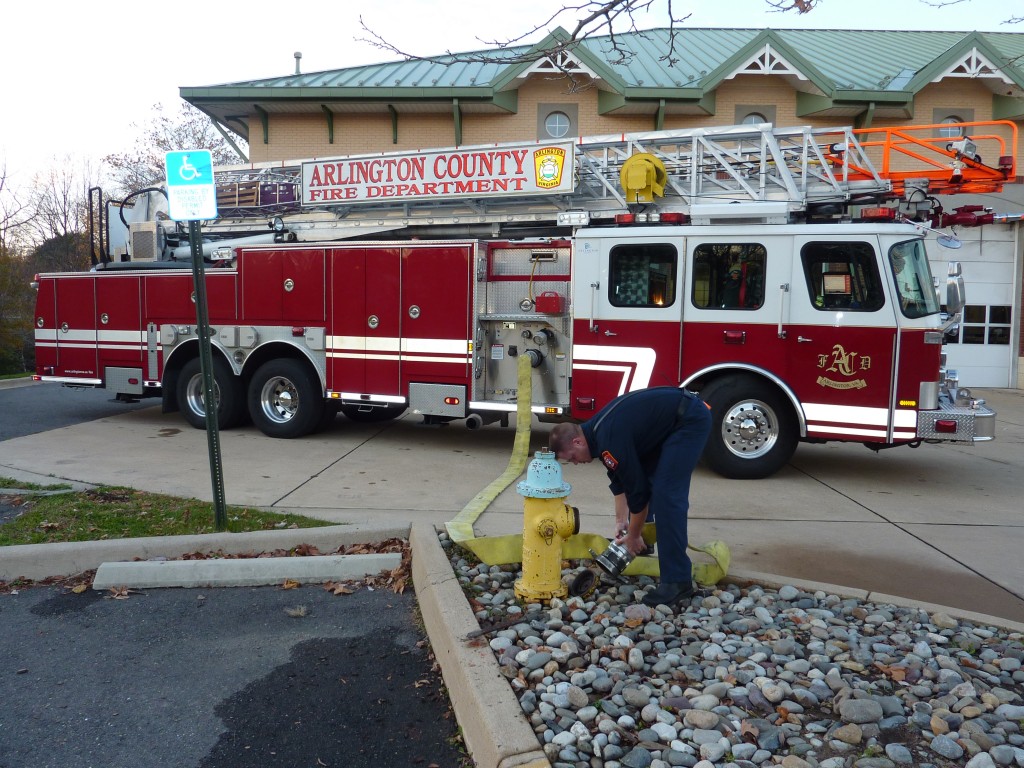
Later we return to the station, where I assist FF Marr in hooking RT111 onto a hydrant, filling the on-board water tank, and operating the pump panel while he makes manual adjustments on the monitor while water was being pushed out.
Reserve Truck 111
The day went by without any calls, which is a good thing. We were there to do the job right, and that we did.
Another day of preserving life and property on Truck 106.
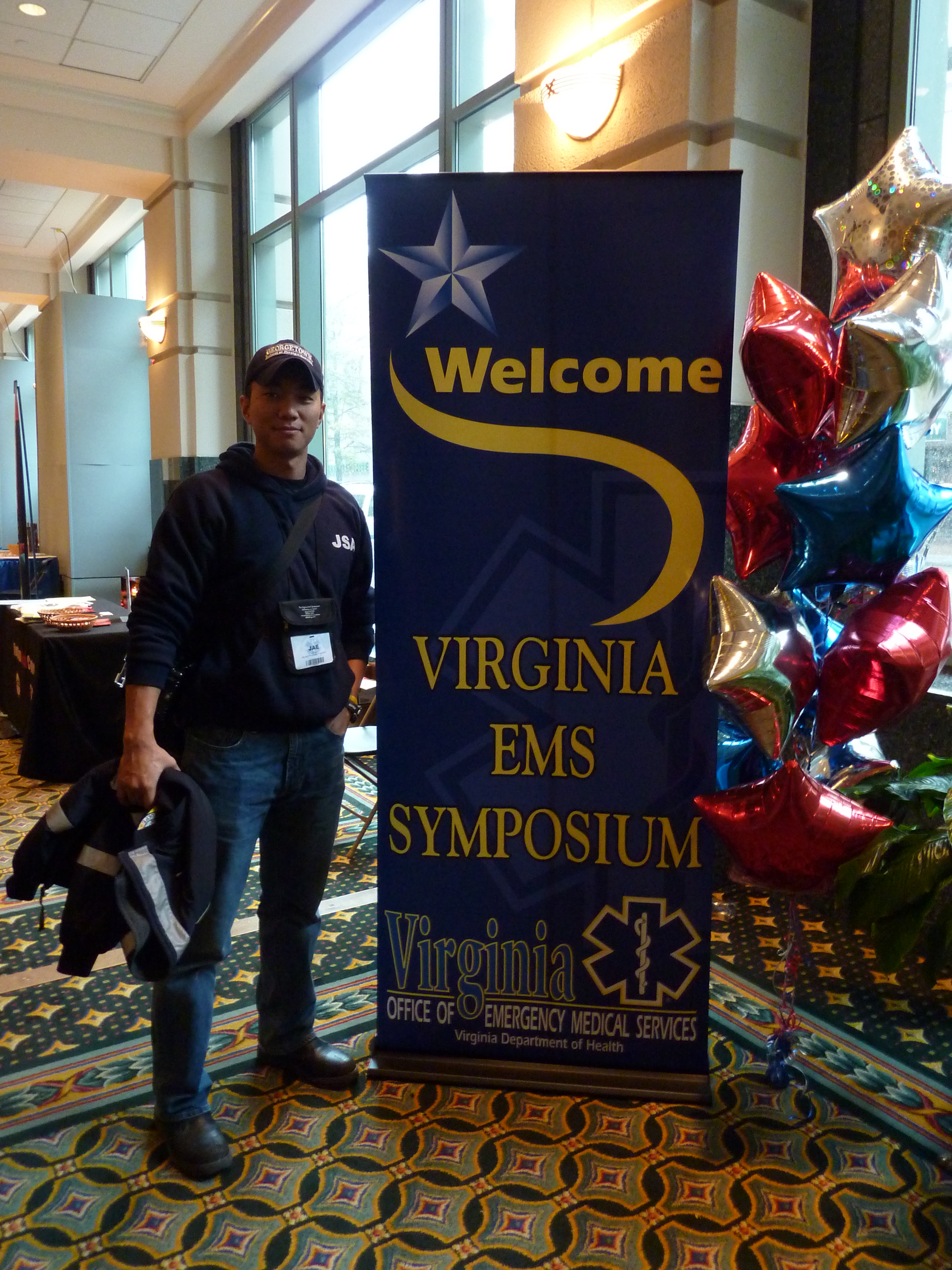
As usual, Laura convinced me into going to this year’s Virginia State EMS Symposium, held in Norfolk, Virginia.
Going through the insane weather on our way there was no joke.
The EMS Symposium is the largest annual EMS event that is hosted and organized by the Virginia State Office of Emergency Medical Services (VAOEMS). Since its first Symposium held in 1980 in Williamsburg, it attracted an average of 2,000 participants. Activities range from specialized courses in which registered EMTs and paramedics can earn CME (continuing medical education) credits required to maintain their respective certifications, meetings for committees aimed to improve education, training, and quality of EMS services, and social activities such as the annual banquet featuring special guest speakers.
This year’s event was held Nov. 11-15 at the Norfolk Waterside Marriott. Registration for this year’s EMS Symposium was $165, which includes tuition for all classes and a participants’ information package and pass. An additional $35 if you wanted to attend the annual banquet. Free H1N1 swine flu shots were given to all registrants this year, which was a big plus if you think about the long lines at local public clinics.
Visit the VAOEMS EMS Symposium web page for more information:
The organizers couldn’t have picked a better week to hold the largest annual EMS event in the state (just kidding; it wasn’t their fault really.) Remnants of Hurricane Ida had developed into a tropical depression and moved northward into the Virginia area, bringing heavy rain of up to 10 inches and gust winds of up to 80 mph. By the time we reached Norfolk, multiple intersections were already underwater, forcing our two-car convoy to get briefly separated (I had to mount a rescue mission to save Laura from driving her car into a sink hole). Eventually, we made it in one piece and began taking the classes we signed up for.
Here is a list of classes I took (classes with a “*” are the ones I highly recommend):
– Trauma Injuries to the Chest
– Clandestine Meth Labs (*)
– Narratives for the BLS Provider (*)
– BLS Trauma Patient Assessment
– Back to Basics (*)
– Tactical Wound Care (*)
– How to Become an Instructor (this class was particularly confusing and somewhat annoying with some participants complaining about the changed policies regarding testing for EMT instructors. Of course, I acknowledge that most of my confusion was due to the fact that I was not familiar with the process of obtaining an instructor certification.)
– Children with Diabetes
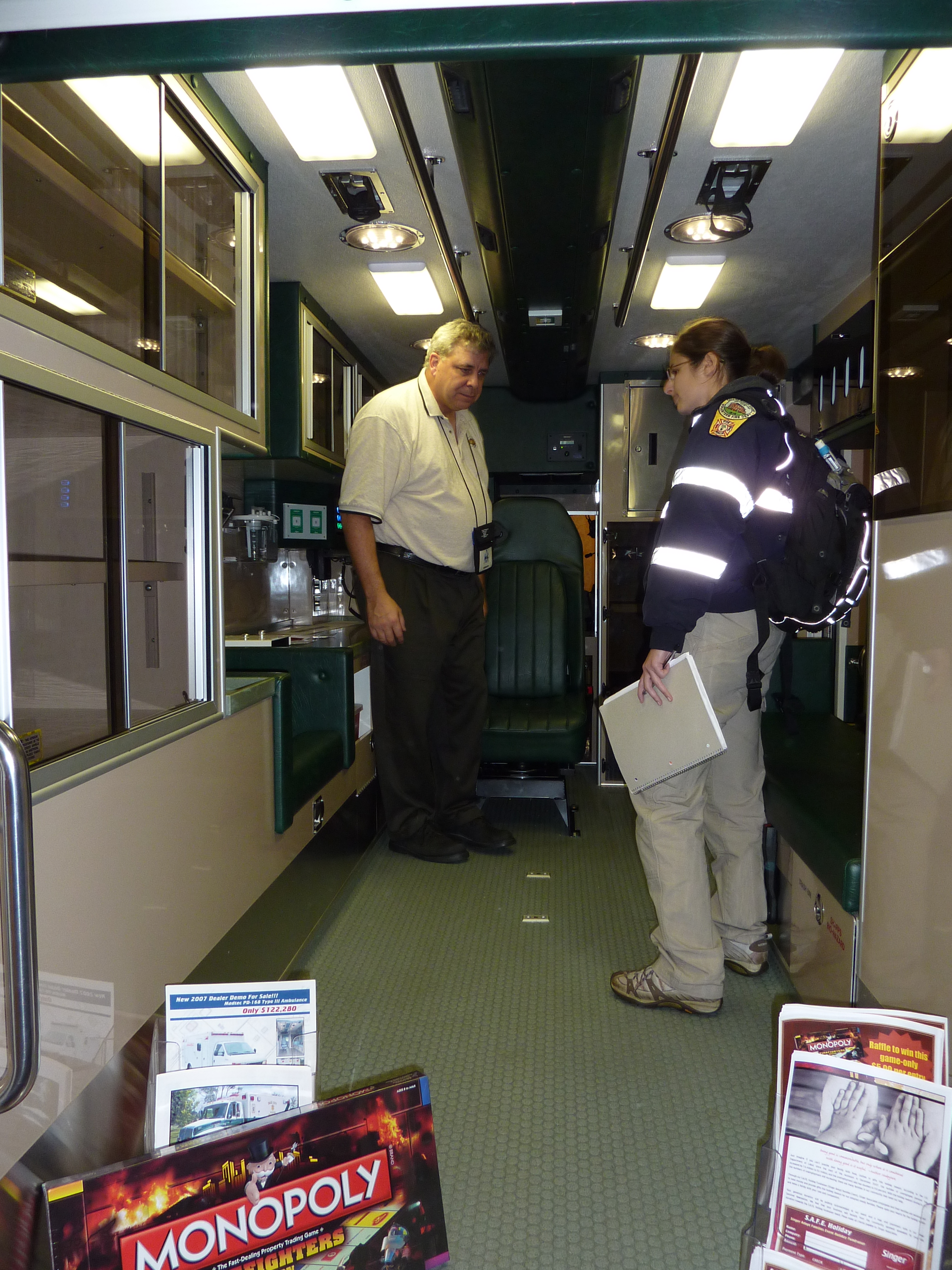
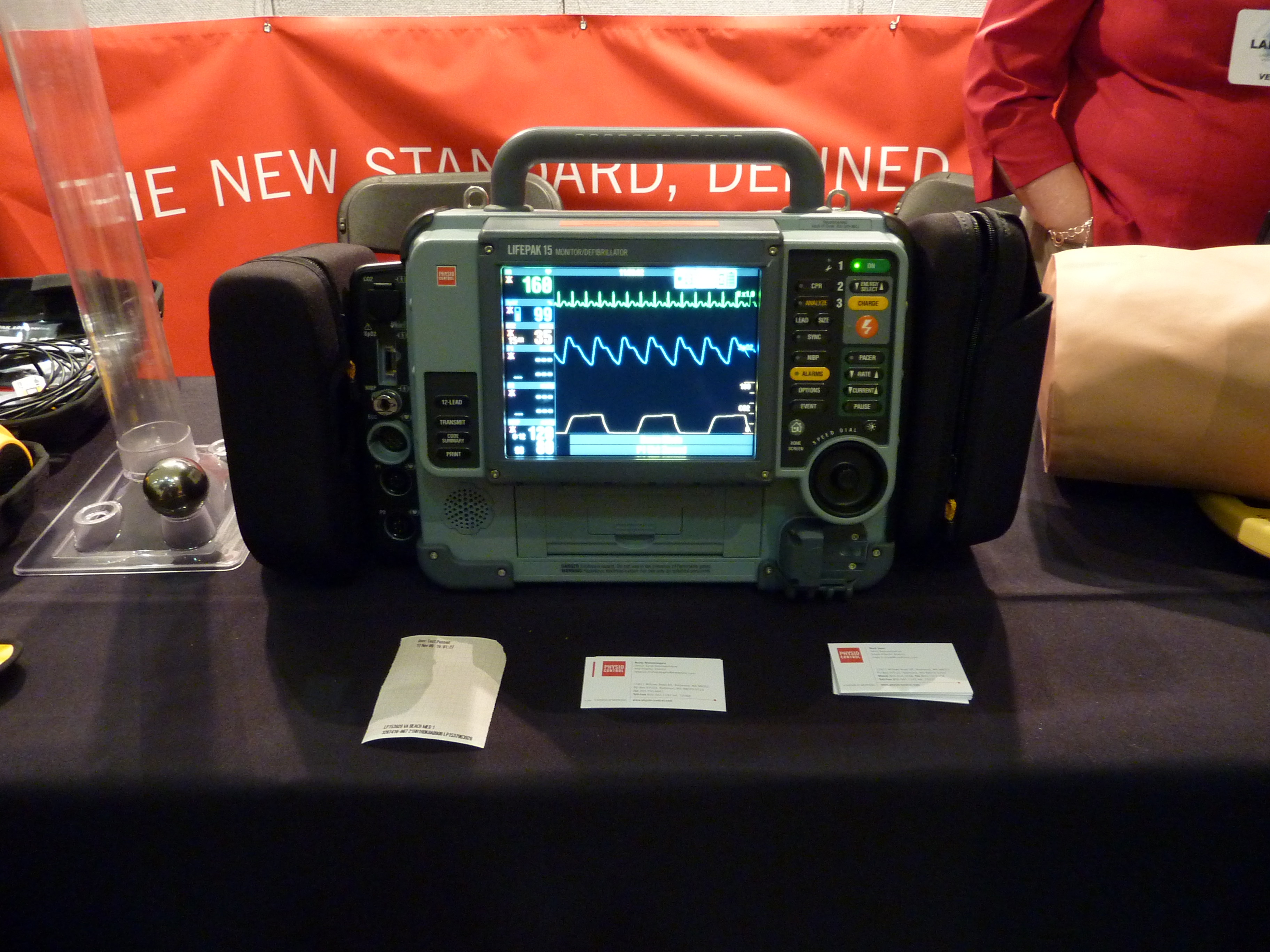
Another major attraction is the Expo, which features major businesses and vendors in Virginia. Exhibits include ambulance apparatus chassis, fire/EMS gear, recruiting stations for fire departments, medical equipment and publications. You can get some valuable discounts from these vendors. Laura and I particularly enjoyed the apparatus exhibit.
An unrelated point, those of you who are familiar with EMS Symposium will also now Bar Norfolk, which is apparently a required venue to visit during the event. Unfortunately, the place was forced to close down a couple of months ago, as the bar experienced multiple instances of fighting and other related violence.